Loading preview...

Start a project
Reach out to us for any inquiries or support.

Contact
We’re here to help you with all your needs.

Call Us
Get in touch with our team anytime.
How We Help
Why Venveo
Resources
Get weekly data — and insights.


Venveo is an award-winning digital marketing solutions provider. Since 2003.
©2026 Venveo
For decades, winning online in building materials, construction and home services meant one thing: ranking on the first page of Google.
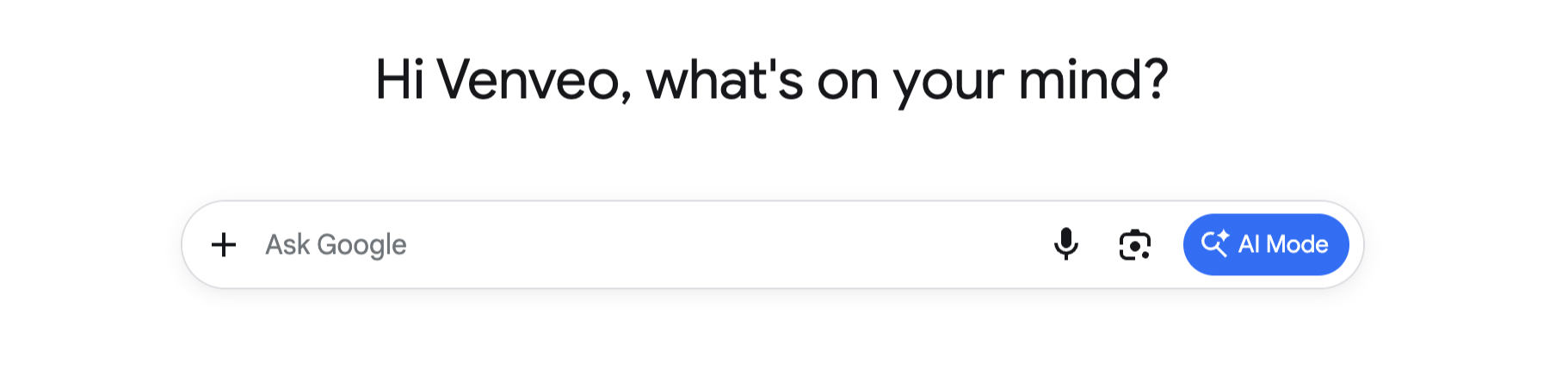
Today, buyers — from general contractors in the field to commercial architects and homeowners — are skipping traditional search results and having direct conversations with AI.
Whether they’re asking ChatGPT for the most durable composite decking, checking Google’s AI Overviews for local HVAC suppliers or using Perplexity to compare window manufacturers, AI is the new gatekeeper.
When a buyer asks AI for a recommendation, it doesn't hand back ten blue links. It delivers a curated shortlist of one to three businesses. If you aren't on that list, you aren't just losing a click — you are invisible during the critical buying phase.
Winning these recommendations requires building on traditional Search Engine Optimization (SEO) with Generative Engine Optimization (GEO). Here’s what drives AI recommendations and how to improve brand visibility in AI generated answers.
Unlike traditional search engines that simply match keywords to web pages, AI tools combine pre-trained knowledge with live web searches (pulling heavily from both Google and Bing) to build real-time answers.
Crucially, AI models are programmed to minimize risk. Before putting your name in front of a buyer, the engine looks for consensus.
If your homepage claims you make the most durable commercial siding on the market, AI views that as bias. If three trade publications, 50 contractor reviews and an active Reddit thread echo that same point, AI treats it as fact and confidently puts your business on the shortlist.
Whether marketers call it GEO, Answer Engine Optimization (AEO) or AI Optimization (AIO), the goal is the same: make it effortless for machines to read, verify and cite your business.
If you are looking at how to improve brand visibility in AI generated answers, start by locking down four foundational pillars:
Google’s official guidance confirms that GEO is an extension of traditional SEO, not a replacement. If crawlers can't read your site, AI won't recommend you. Ensure your site loads fast, don't hide product specs behind heavy JavaScript and verify your site in both Google Search Console and Bing Webmaster Tools, and make sure your robots.txt file isn't blocking AI search crawlers (like OAI-SearchBot or PerplexityBot).
AI struggles with brands that try to be everything to everyone. State plainly who you serve, what you sell, where you operate and what sets you apart. Keep these details identical across your website, LinkedIn, Google Business Profile and industry directories.
Buyers ask AI specific, complex questions that mirror real job site hurdles. Structure your website to match. Use clear subheadings and put direct, plain-language answers right up front. This helps busy contractors find what they need fast and makes it effortless for AI to pull and cite your expertise.
Ensure critical specs and product details are written in plain, crawlable HTML text rather than locked inside PDFs or images. Use standard Schema.org markup (Organization, Product, LocalBusiness, FAQ) and updated Google Merchant Center feeds to reinforce your catalog data and stay eligible for rich search features.
Once your foundation is set, focus on the external signals AI models weight most heavily:
Generic blog posts rewritten from existing search results do nothing for AI visibility. Pages with proprietary benchmarks, installation time comparisons, real ROI case studies and hard technical specs get cited.
In traditional SEO, a mention without a backlink had limited value. For AI, unlinked mentions are gold. Getting featured in trade outlets (Journal of Light Construction, Architectural Record, ProBuilder) and industry "Best Of" roundups directly builds your authority.
Search engines heavily index user-generated platforms like Reddit and YouTube. AI tools pull directly from those threads and video transcripts to gauge real-world sentiment. Encourage customers to share authentic experiences, participate transparently in industry forums and post product demos and installation walkthroughs on YouTube.
For local contractors and regional distributors, reviews drive recommendations. Actively collect detailed reviews on Google, Houzz, Angi or B2B platforms like Thomasnet. Reviews that mention specific services, products and cities give AI the local context it needs to recommend you.
AI favors recency. Regularly update your product guides, spec sheets and project guidelines with current building codes and material data.
Your competitors are actively shaping the baseline AI uses to judge your brand. Once a month, open ChatGPT, Gemini, Claude and Perplexity and run the exact prompts your buyers use:
As you review the answers, look for three things:
Tracking these three signals each month gives you a clear roadmap for how to improve brand visibility in AI generated answers before your competitors lock down the category.
AI is rapidly becoming the primary way contractors, architects and homeowners discover and vet the businesses they trust. The companies that win won't necessarily have the biggest ad budgets — they will have the clearest positioning, the best technical resources and the strongest third-party proof.
Turning your digital presence into that kind of growth engine is where we come in. At Venveo, we help building materials manufacturers, distributors and construction companies bridge the gap between technical SEO, authoritative content and digital marketing — so when buyers ask AI who to trust, you are the obvious answer.
Ready to build a brand that buyers and AI can't ignore? Contact our team to see how we can help you stand out, build authority and outpace your competition.