

Loading blog content...

Reach out to us for any inquiries or support.

We’re here to help you with all your needs.

Get in touch with our team anytime.
How We Help
Why Venveo
Resources


Venveo is an award-winning digital marketing solutions provider. Since 2003.
©2026 Venveo

All of these factors have affected how and why everyone from DIYers to architects to designers, builders, contractors and trade professionals are purchasing building products.
What's the biggest takeaway this year?
One digital channel won't do it. If you're marketing to multiple audiences, then you need to meet them where they are and offer what they want when they get there. Some want email, some want social media, others need technical information: You need to have all of it available in the form and depth they want when they need it. One great website won't be enough if what they want is to research on social media.

Venveo and The Farnsworth Group teamed up to survey over 1,700 industry professionals and DIYers from across the United States to gain insights on what's shifted in how your customers research, find, select and purchase building materials products. This is the second year that we've conducted this survey. If you want to see last year's report (for free), click here.
The responses also include incredible insight into how their buying habits have changed, what they need from manufacturers and how you can plan for the future to deliver to your customer's needs and continue to grow your business for years to come.
While reading this report, you'll learn:
We received 1,779 survey responses from DIYers, commercial and residential architects, builders, general contractors and specialty tradespersons between August 8 – September 13, 2021.
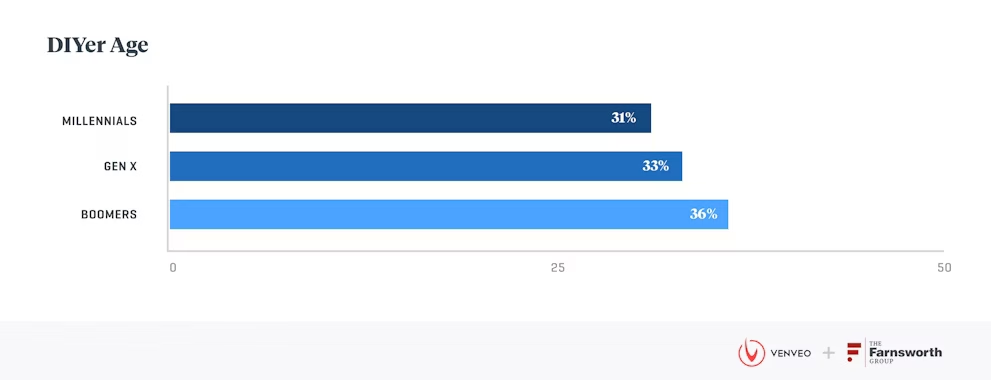
31% of the DIYers surveyed were millennials, 33% were Gen X and 36% were baby boomers. DIYers must have purchased products for a home improvement project and participated in a DIY project within the last three months to qualify for the survey.
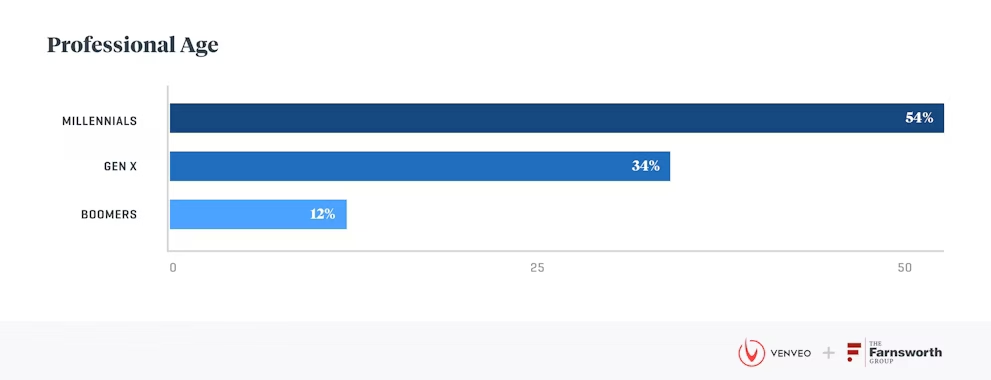
The 775 professional respondents included residential and commercial builders, general contractors, architects, designers, engineers, specifiers, contractors and installers. To qualify as a respondent, they must have influence on products purchased and either sole or joint decision-making authority for their projects. Of the professional respondents, 54% were millennials, 34% were Gen X and 12% were baby boomers.
As millennials are now aging into their 40s and accounting for a large portion of professionals in the building materials industry, we’re moving into a time where the majority of your professional audience not only prefers a digital experience, they expect it. Millennials also want a depth of information so they can self-educate and make the best decision possible (more on their bent for research later).
This cannot be understated: You must start planning for millennials, and their demand for digital, as the main audience in the building materials industry.
As a manufacturer, you aren’t planning one year in advance — you’re planning 5–10 years in advance. And that’s where this millennial piece really comes into play. It should influence your long-term business strategy. You need to be thinking about the digital landscape ten years from now. Before you know it, Gen Z will be playing a major role in your branding, product development, distribution and go-to-market strategies.
You need in-depth, clearly communicated information, consistency across physical and online, a seamless digital experience, and engaging tools like product visualizers, cost calculators and 3D imagery. If you’re focused on making what you have work, you can get by for a while, but the pace of change is only accelerating, and eventually, you may find yourself too far behind to catch up.
Construction projects are still going strong, despite availability challenges facing both DIYers and professionals. There is a high volume of purchases across a range of product categories.
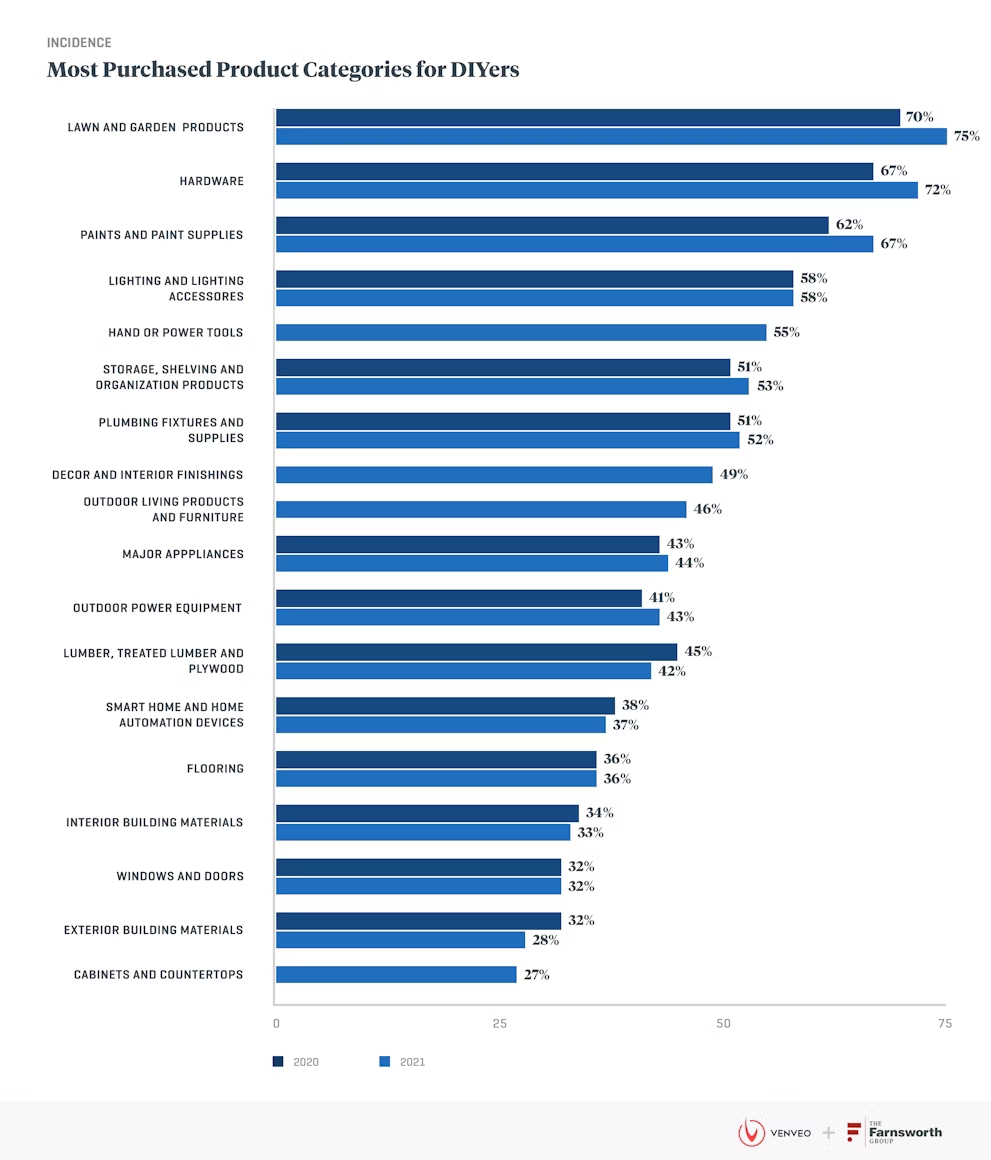
Purchases are across multiple product categories, which reflects the wide range of projects DIYers are still completing as well as the increased basket size in many cases. There was speculation that home renovation projects had reached their peak in 2020, but that’s clearly not the case. This is also reflected in Home Improvement and Lawn & Garden retail sales data that shows 2021 is out-performing 2020.
People will continue to invest in their homes. Nearly half of the DIYers surveyed invested in lawn and garden products in the preceding three months, a 5% increase from 2020. 44% purchased hardware (up 5% year-over-year), and 36% bought paint and related supplies (also up 5% year-over-year). These may be smaller projects, but the purchase incidence rate is high.
Last year was the summer of more projects and pushing DIY limits. People had more time at home and more disposable income to spend on their home. They found projects to do that, without lockdown, might never have been done. Today, most homeowners have completed many of the DIY projects they are capable of doing on their own and are comfortable having contractors back in their homes. Homeowners are now hiring contractors for bigger projects, which means historically normal DIY projects are being done: paint, hardware and smaller DIY tasks.
Most categories remained flat year-over-year or slightly higher in 2021. However, the greatest decline was in lumber and exterior building products, including decking, siding and roofing. These are products needed for projects that may require contractor support, and homeowners were more comfortable with contractors working outside of their homes than inside in 2020.
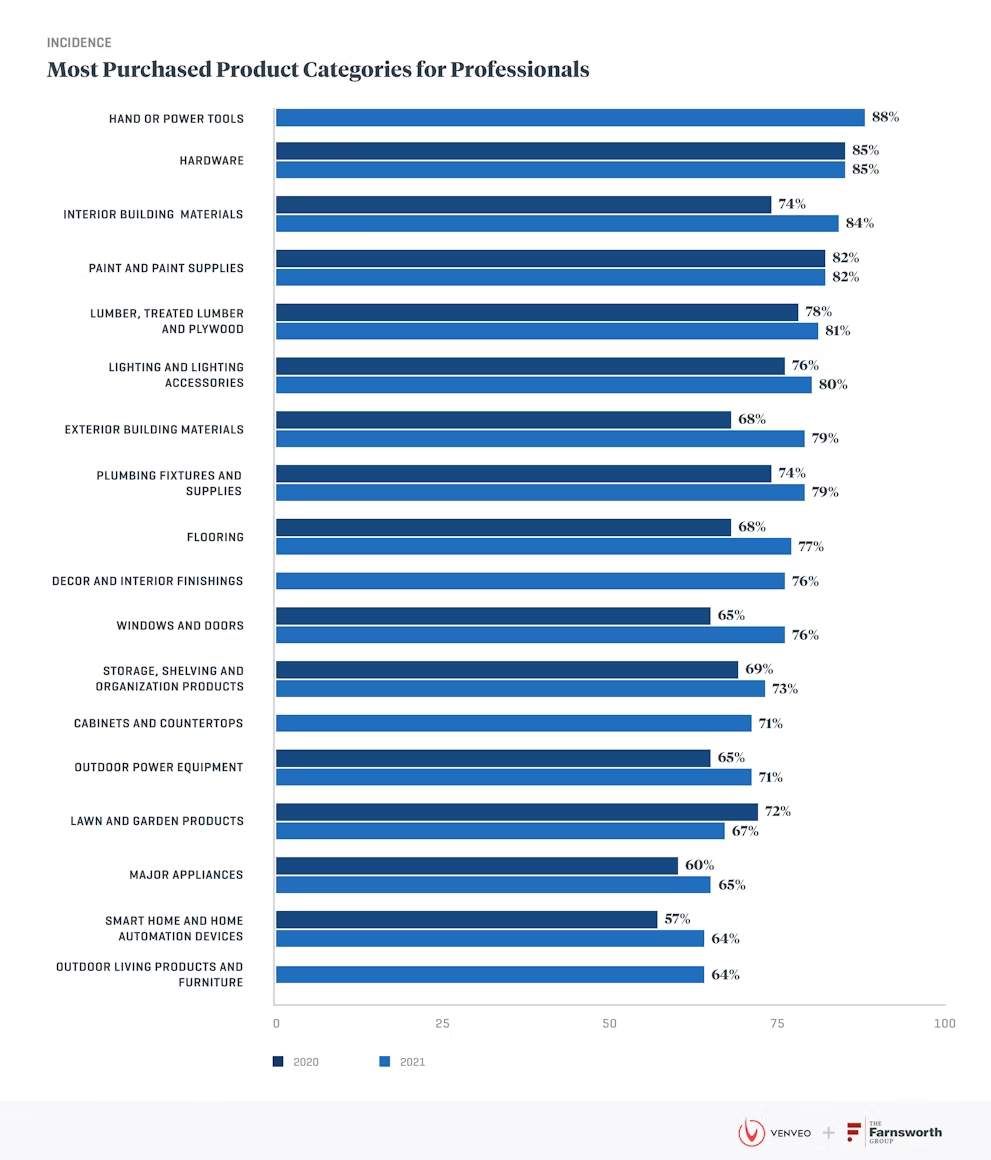
Professional product purchases saw greater increased purchase activity year-over-year compared to DIYers. The products with the largest percent of purchase incidences included tools, hardware, interior building materials (up 10% compared to last year) and paint.
Exterior building materials and windows and doors saw the biggest jump in purchases since last year, each with an 11% increase. Lawn and garden purchases by professionals decreased 5% this year, likely due to the increase in DIYers’ purchase incidences.
Overall, we are seeing the loss of contractor projects from approximately March-May last year result in pent-up demand that is being reflected in 2021 activity and will likely continue.
It’s no secret that availability issues are a concern, both in terms of building materials and professional services. But these delays aren’t stopping people from making purchases for their projects.
While supply chain delays become an accepted norm, manufacturers that regularly communicate with their customers about lead times will set themselves up to grab those sales as pent-up demand continues into 2022.
Availability issues are affecting professionals more than DIYers, though both groups are experiencing shortages. 66% of professionals reported the issue occurring at least somewhat regularly, compared to 53% of DIYers.
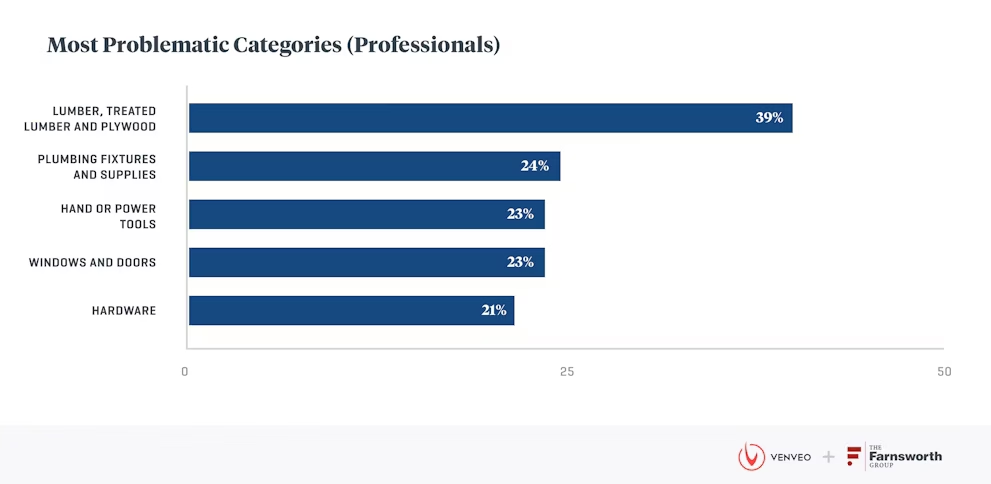
The problem is also impacting commercial professionals more than those in the residential space. Lumber is the top material cited by professionals as having availability issues. Other problem products include plumbing fixtures, tools, windows and doors.
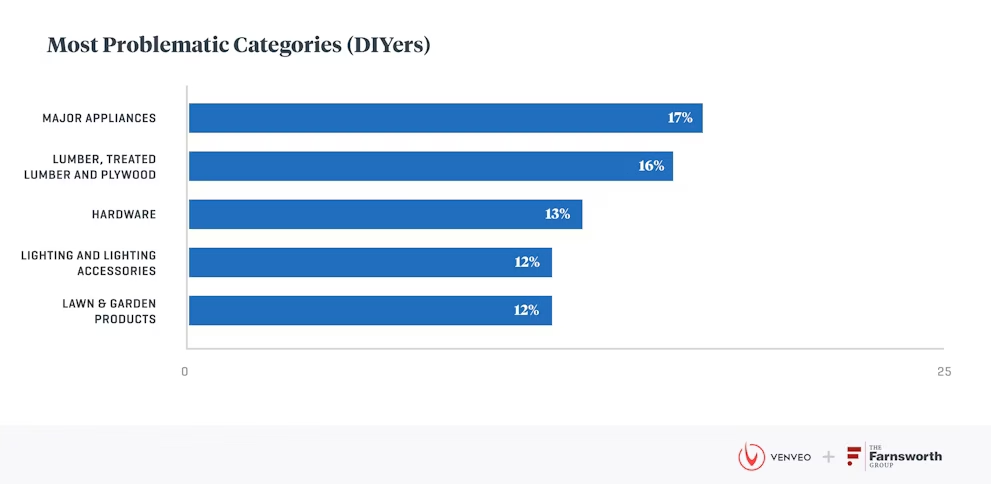
Among DIYers, millennials report the highest frequency of availability issues (60%) compared to Gen X and boomers. Millennials are also more active DIYers, likely to complete more projects and purchase more products. Lumber availability is also problematic for DIYers, but they actually cite major appliances as the number one item in short supply.
The issue of availability in the building materials industry is becoming accepted by both DIYers and professionals. And it’s not impeding purchases; in fact, only 14% of DIYers and 5% of professionals reported that they didn’t make a purchase when the product was unavailable.
Instead, DIYers and professionals said they either purchased the product at a different retailer, ordered and waited for the product to arrive, or purchased a different brand or product instead.
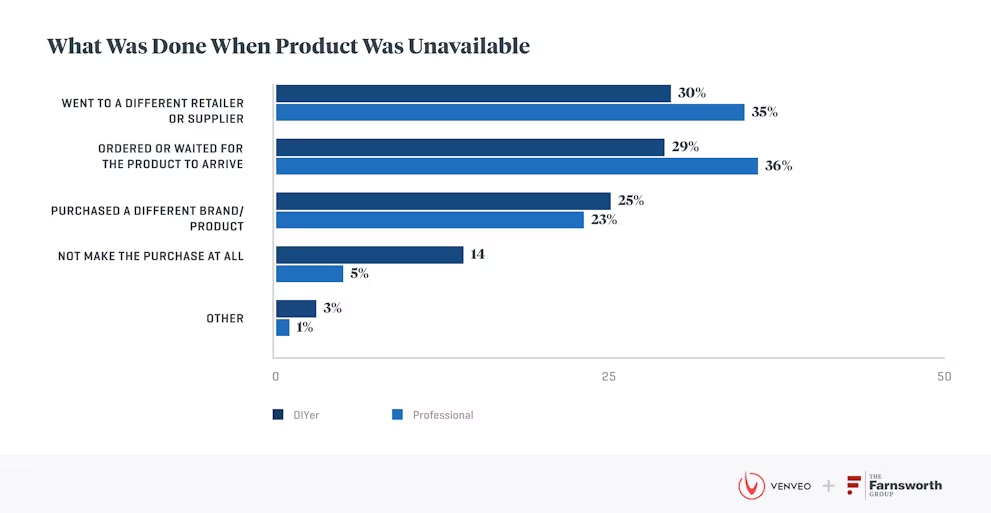
So while a specific retailer or manufacturer may miss out on a purchase, the purchase is still happening somewhere in the industry. But the timing — and the price — is unpredictable, especially for professionals who feel the pressure to secure the right building materials for their projects.
The lesson here for manufacturers is that transparency is more important than ever. Consumers need as much information about your inventory and ongoing product availability as possible.
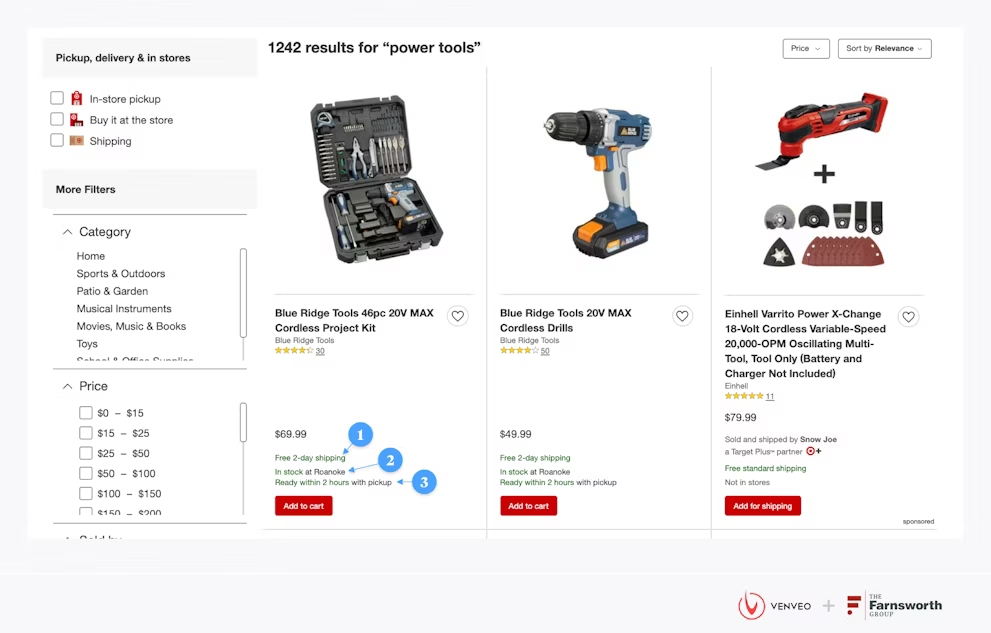
Think of Target. They tell you how long it will take to ship (1), if it’s in stock at your selected store (2) and if it can be ready for pick-up within a certain amount of time (3). And when you click on a specific item ...
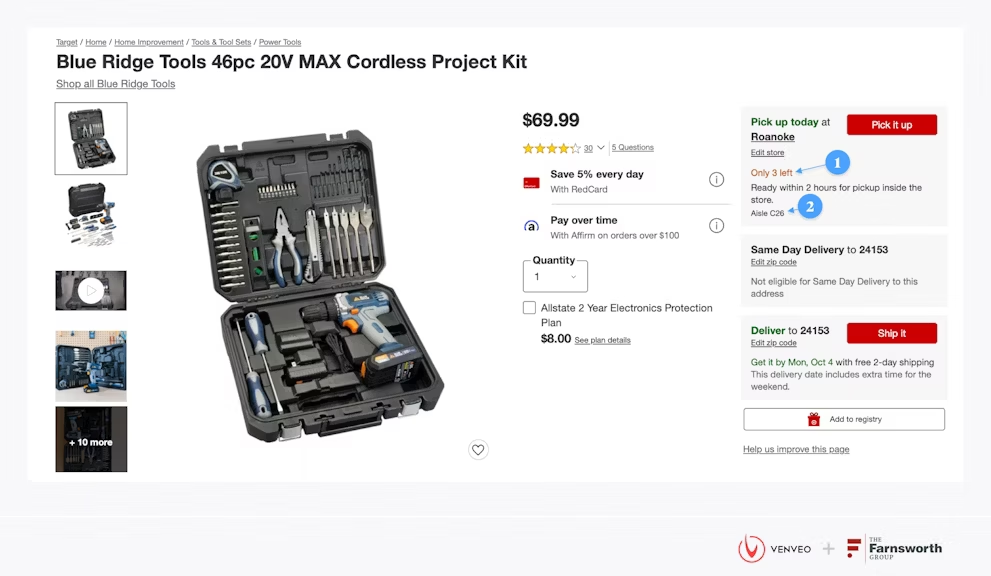
It will tell you how many are left in your store (1) and what aisle it’s located on (2): Full transparency at every step of the buyer’s journey. Manufacturers don’t have to use the same system as Target, but the level of transparency and clarity should be matched.
Especially when it comes to shipping time. Pros have accepted that they may have to wait for a product, but they still need to know when it will arrive. Push information to suppliers, on your website and across your social media accounts. Don’t be afraid to over-communicate and make sure the details are consistent among all channels.
Also, consider how you can convert leads who are looking at your competitors. 25% of DIYers reported purchasing a different product when their original preference was out of stock. How can your product line become that backup choice?
Manufacturers have the opportunity to leverage availability. There’s a new willingness to try new brands if there’s product in stock. This is going to be either a threat or an opportunity depending on how you can fill the void for your customers.
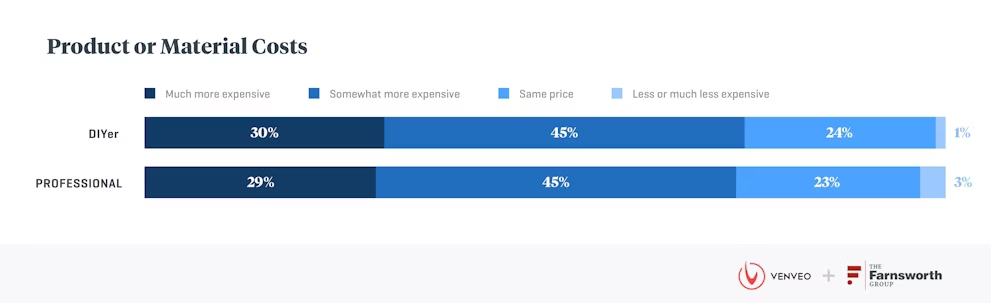
DIYers and professionals alike are noticing price increases in building products. Certainly, supply issues and raw material availability are impacting price changes. But only 20% of professionals thought project costs increased significantly since last year. 56% reported just a little change in overall project costs.
Manufacturers typically don’t want to publicize price increases — it’s not a fun conversation for anyone. This is where the valuable relationships you’ve worked so hard to build can come in. You can offer a better customer experience by having reps reach out to their customers one-on-one to discuss price increases before they happen.
Including a letter from your president or CEO in a company newsletter is also a great strategy that gives you the opportunity to be transparent yet genuine about what’s happening with your prices and why.
Transparency is important. If there’s a specific reason for a price increase, or you expect it to be temporary, tell them that. But you don’t have to talk about when prices will come back down (because they might not). Instead, focus your efforts on elevating your brand experience so that you’re a helpful resource to potential customers.
Finally, if you’re increasing prices, you should also look into increasing the value you’re offering through your digital presence. This is the time to provide additional resources like videos, how-to articles, white papers, case studies, professional interviews and webinars. This can help shift the focus to the value of your expertise and position you as a partner.
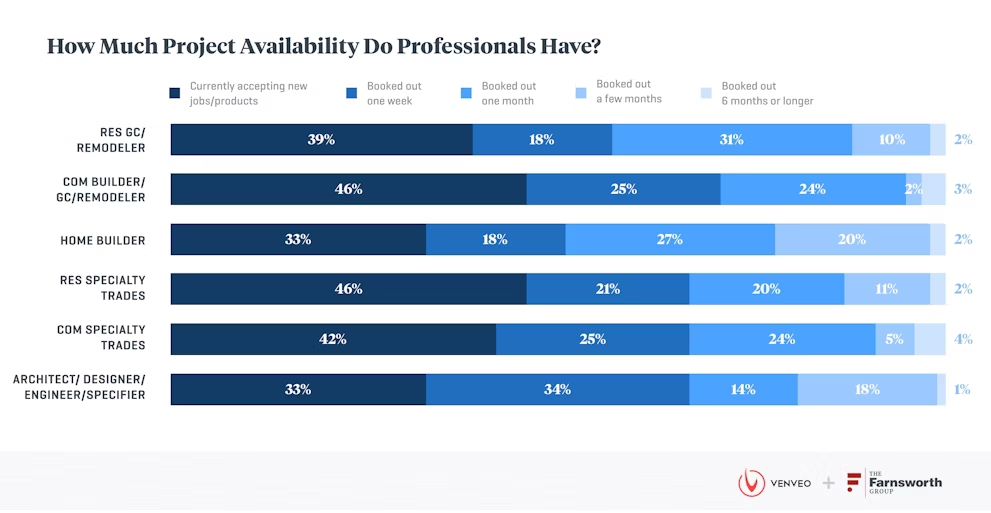
DIYers and professionals alike are feeling the pinch of demand. And when you look at the availability of professionals to take on new projects, it supports the feeling among homeowners that if you don't know someone personally, you're going to be waiting a while before you can get something done.
31% of residential contractors and remodelers are booked out a month in advance, along with 20% of homebuilders. A backed-up project funnel is inevitable when you combine high demand, material constraints and limited labor. This should lead to continued demand throughout 2022 because the pent-up demand for both materials and professionals is not being met today.
For manufacturers, it's also important to note that professional availability also makes it harder to get their attention from a marketing standpoint. With such busy schedules, your marketing must be delivered in a convenient, digestible medium that meets the customer where they are. It must also deliver the types of information professionals and DIYers expect — more on mediums and types of information to follow.
Millennials are highly educated consumers and flock to online resources to conduct research more than any previous generation — even when they're in-store. Manufacturers need to focus on demonstrating a product’s value to show these consumers why it’s the best choice. These buyers aren’t just looking for the cheapest or the most popular product. They want the best fit for their specific project.
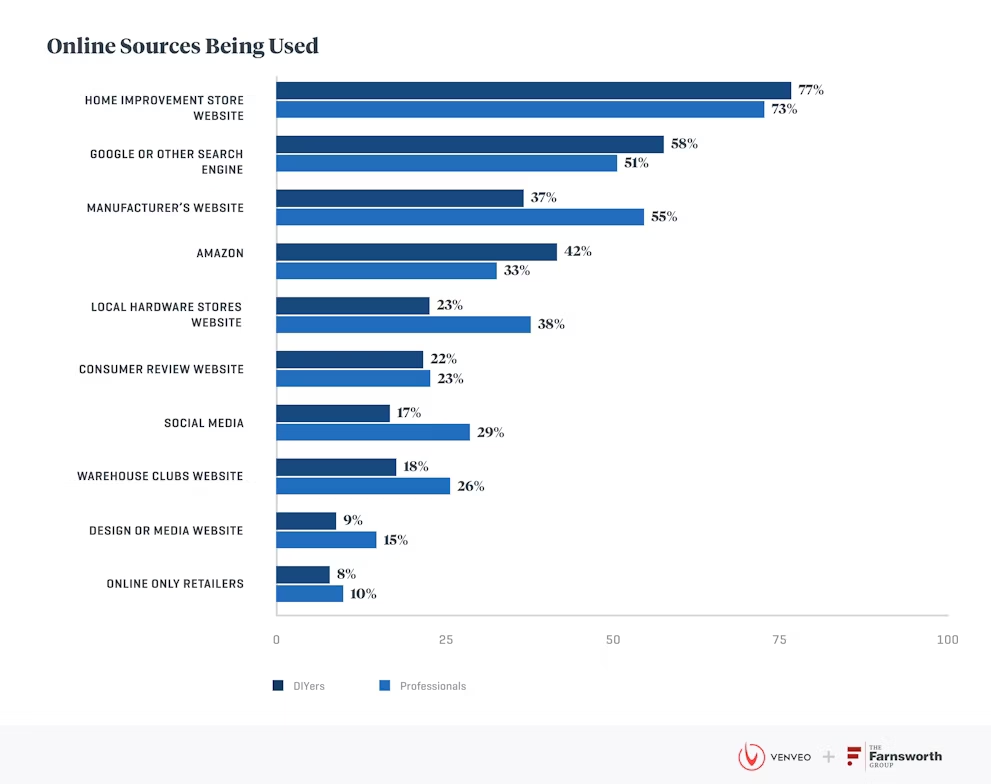
When searching for product information, DIYers primarily use home improvement store websites, Google and Amazon. And it's not just DIYers who are using these third-party sites to gather information: 46% of architects, designers and engineers use Amazon to research product details.
The reason is simple: People trust the information they find there, and reviews are powerful. Even if you don't sell your product on Amazon, look at a competitors' listings to understand what information is offered there and supply similar details on your company's website. Presenting information in a way that is similar to a site your customer visits frequently and trusts (like Amazon) helps build confidence in your brand and your products.
On big box retail websites, your products will appear right next to your competitors. Make sure you put extra thought into answering questions and speaking to pain points. Each product listing should also push your product's unique value proposition. Make customers feel confident that the product offers the best solutions for their specific situation.
Manufacturer sites are also heavily used, and in many cases, they may be used to gather information missing on supplier sites. Clearly, customers visit multiple sites, which, again, reiterates the consistency required to create a seamless digital experience.
Social media is also being used for research, particularly among professionals. Facebook is one of the top platforms for general contractors since they often use their own Facebook pages to drive business and interact with customers. Commercial builders and general contractors are the most active group of professionals that research brands through social media.
YouTube offers huge potential reach for manufacturers. 29% of all respondents report using the platform to find home improvement information. And 37% of professionals use YouTube for information related to their jobs. YouTube is largely untapped in building materials. A couple of larger companies make great content, but there are significant gaps in most product categories. If you're looking to grow your market share, investing in a YouTube strategy that offers installation videos, tutorials and how-to help can deliver significant returns.
Quikrete does this well by sponsoring a YouTube channel for DIY enthusiasts called Home Made Modern. The company partners with the channel's creator Ben Uyeda to create a set number of videos each year that feature their product as a primary material.
Online visits surpass in-store visits across all product categories.
Both DIYers and professionals conduct more research on less frequent purchases, particularly those at a higher price point like smart home devices, major appliances and hand/power tools. Commercial professionals and architects are the groups most likely to prefer more online research.
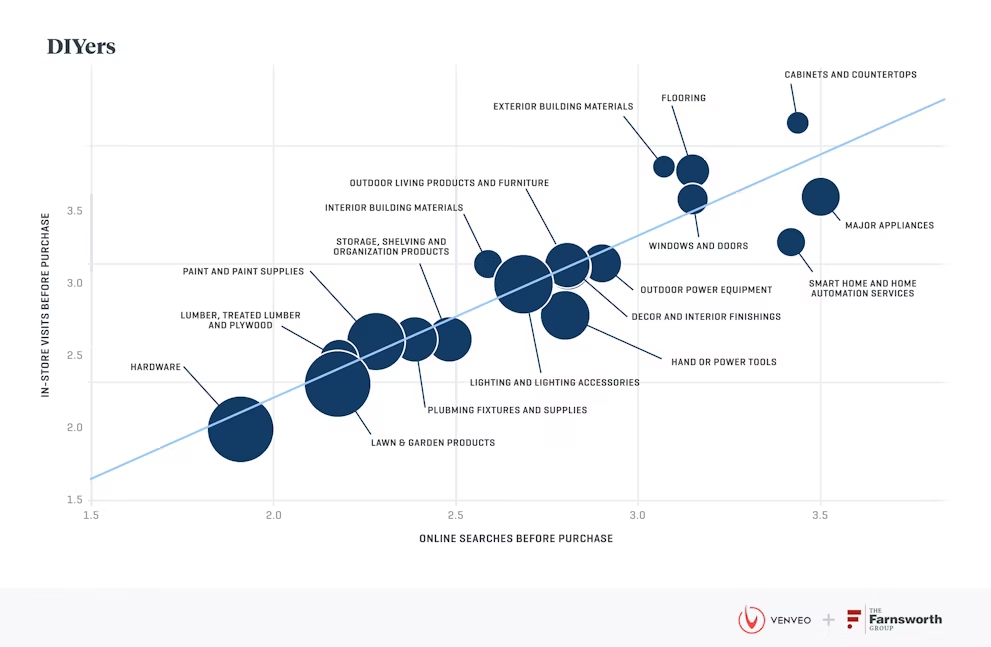
For DIYers, cabinets, countertops, flooring and exterior building materials tend to have more in-store visits compared to other categories.
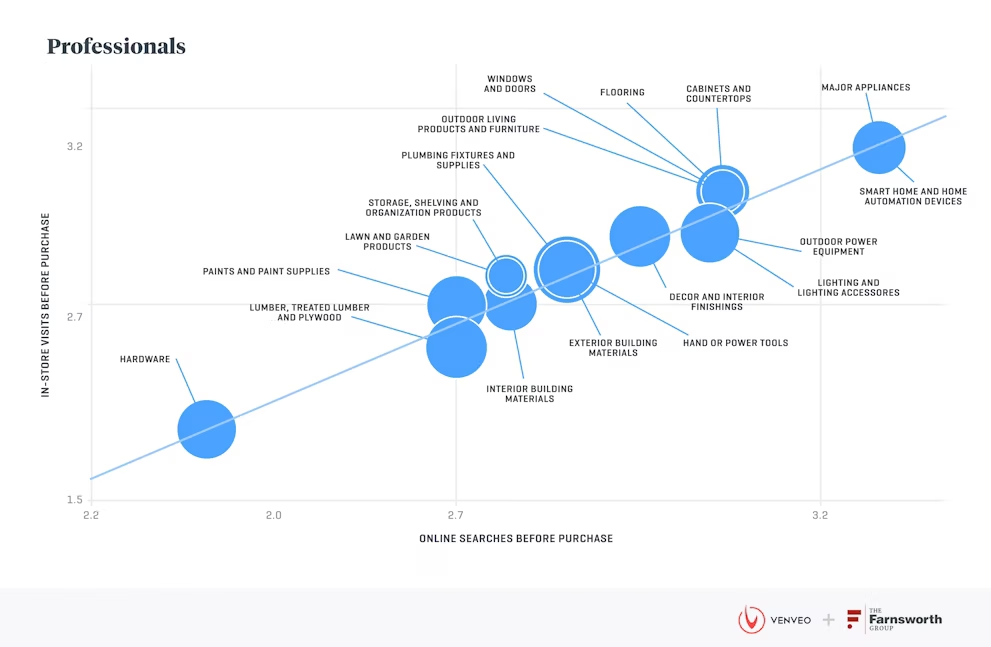
Professionals tend to spend the most time researching major appliances, smart home and home automation devices, cabinets, countertops and flooring.
But all of those store visits for both audiences still don't surpass the number of online visits. That means DIYers and professionals are taking the time to go back and forth to really get to know a product. They might research online, then go to the store to talk to a sales rep and check out the product in person. Then they go back home and look up specific product details and reviews before making a decision.
This back and forth from store to online to store again really drives home the importance of seamless messaging across all of your platforms. Purchases made in-store do not decrease the importance of the online experience; they’re likely fueled by a strong online experience.
Manufacturers can capitalize on this trend with online information that enforces the in-store experience. Include buttons to find a local dealer on your website, and bring them to a store with displayed products they can touch and feel.
And ensure that your website is mobile-optimized as well because some of this online research is being done in the store on a customer’s smartphone.
Millennials conduct online research for building products much more frequently than their Gen X and boomer counterparts. In fact, consumers are more likely to research a product category online than in the store. And when they are in-store, both millennials and Gen X frequently perform more online research.
This reveals an important piece for manufacturers: in-store and online strategies shouldn’t compete with each other; they should complement each other.

Overall, both DIYers and professionals visit more building product or project-related websites than they did building product stores. When you think about it, that makes sense: It’s easier to go to a website than into a physical store.
When researching online, DIYers and professionals focus on product information, availability, pricing and reviews. They also read technical documents and installation guides in advance or zoom in on imagery to see specific product features.
When in the store, they fill in the gaps with things they can’t do online, like touching the product and comparing aesthetic options.
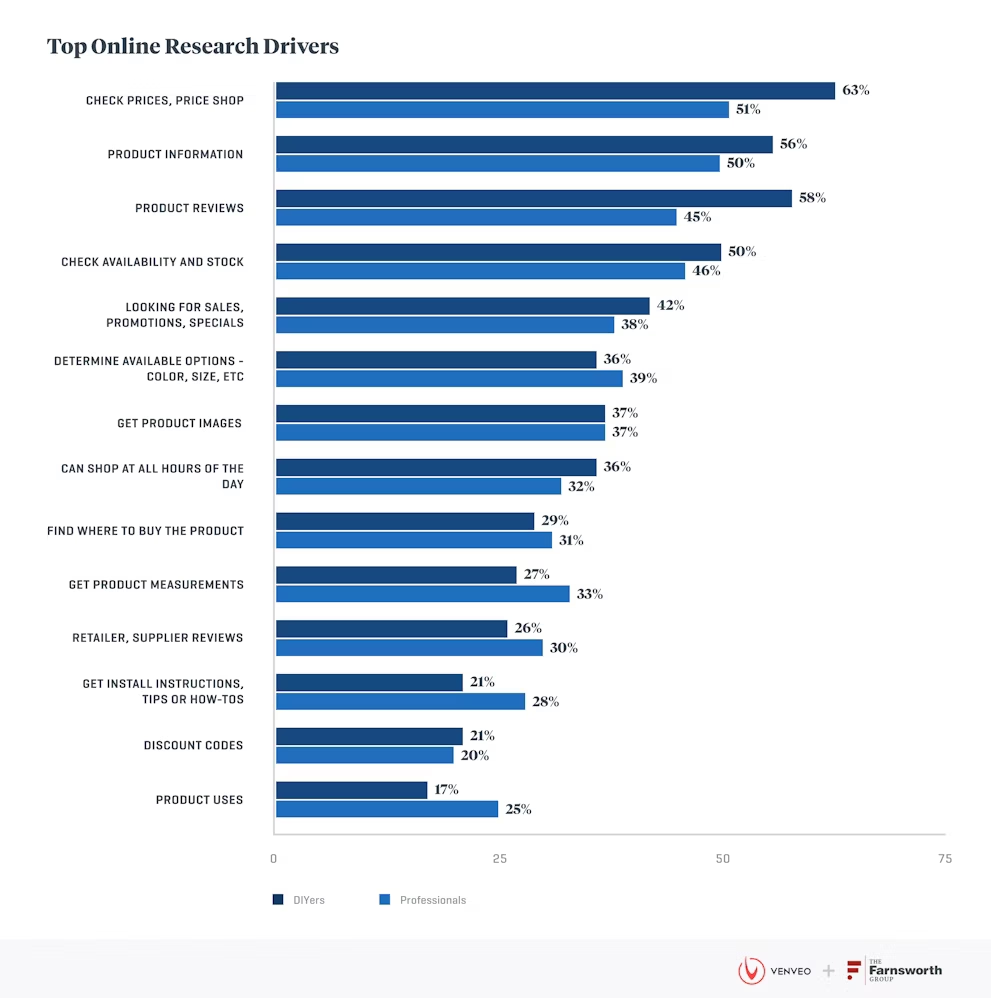
It’s clear that both DIYers and professionals are going online to find product information — but what exactly are they looking for? The top four categories they’re researching are prices, product information, reviews and availability.
We know manufacturers can’t always list prices online. But it’s the number one reason DIYers and professionals research online. If you’re not providing this information — or at least offering directions on how to get it — potential customers are going to leave your website and look for it somewhere else.
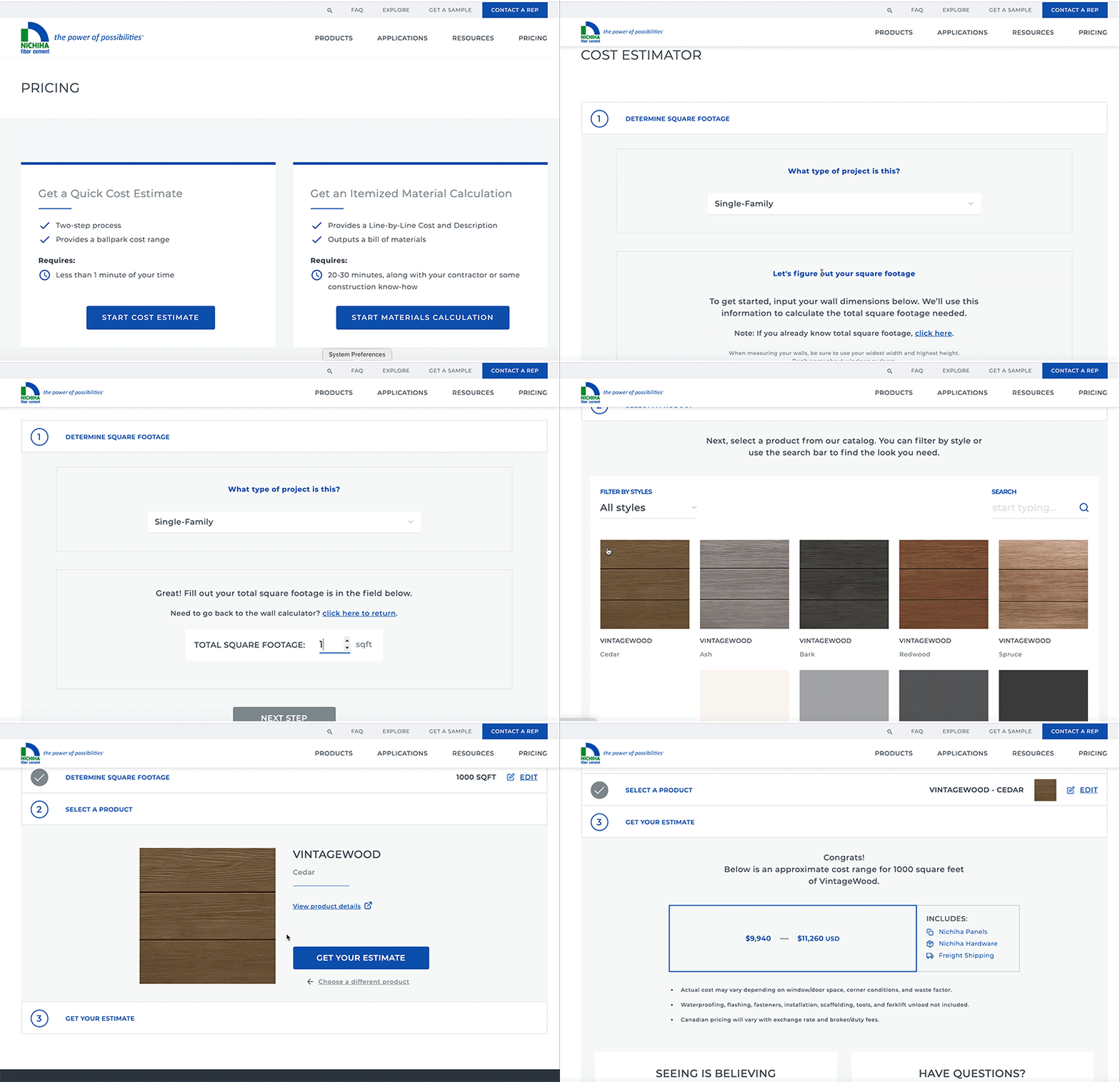
Nichiha, a fiber cement cladding company, provides an estimator on their website, so prospective buyers can get a rough idea of how much it will cost before reaching out to a sales rep.
Trex, a decking company, also has a product calculator on their website. Once you put in your parameters, you can see the pricing for their good, better and best product options.
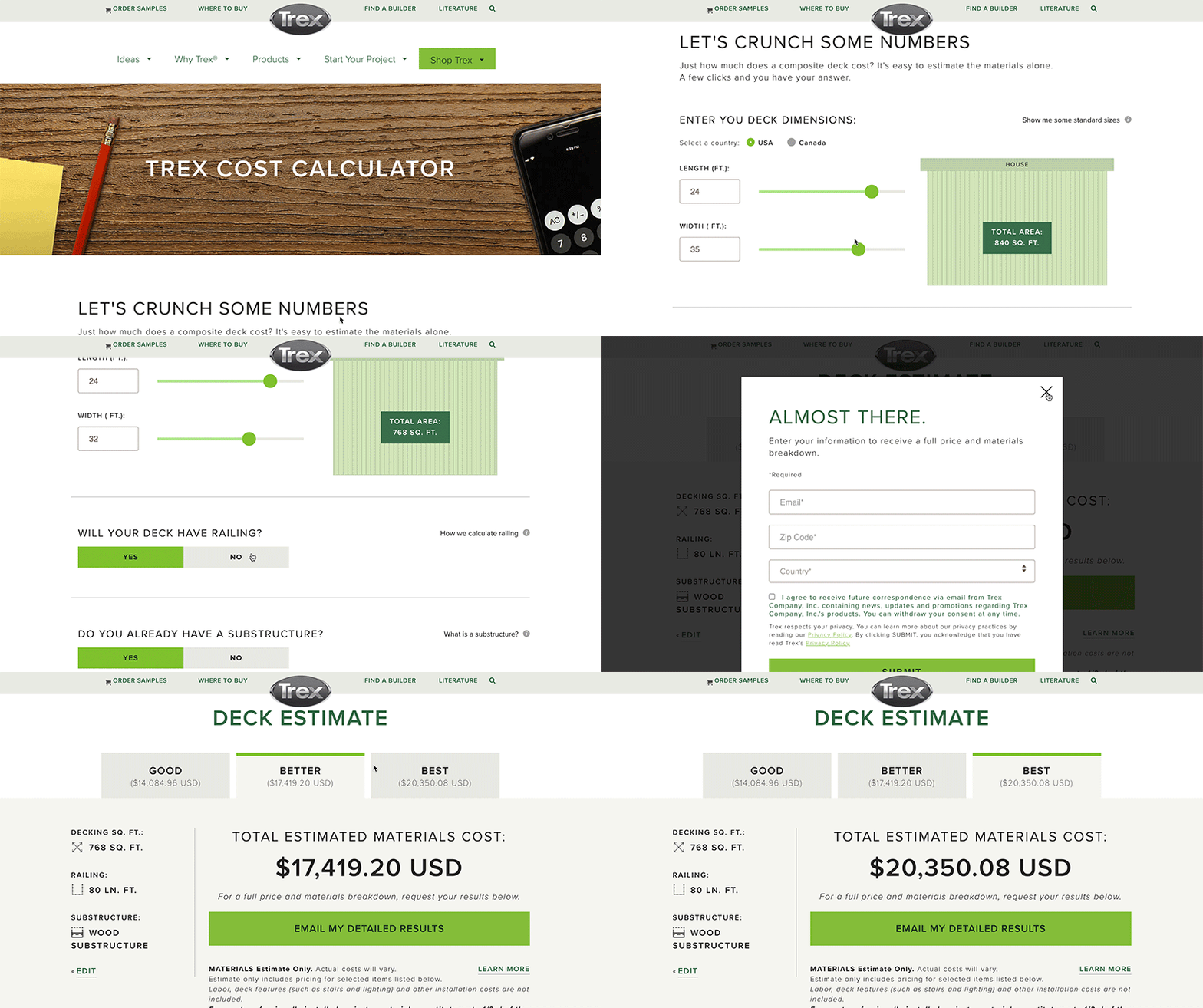
And for higher-ticket items, make sure you validate the cost. People are willing to spend more if the value is there. But you need a great story to back up your claims.
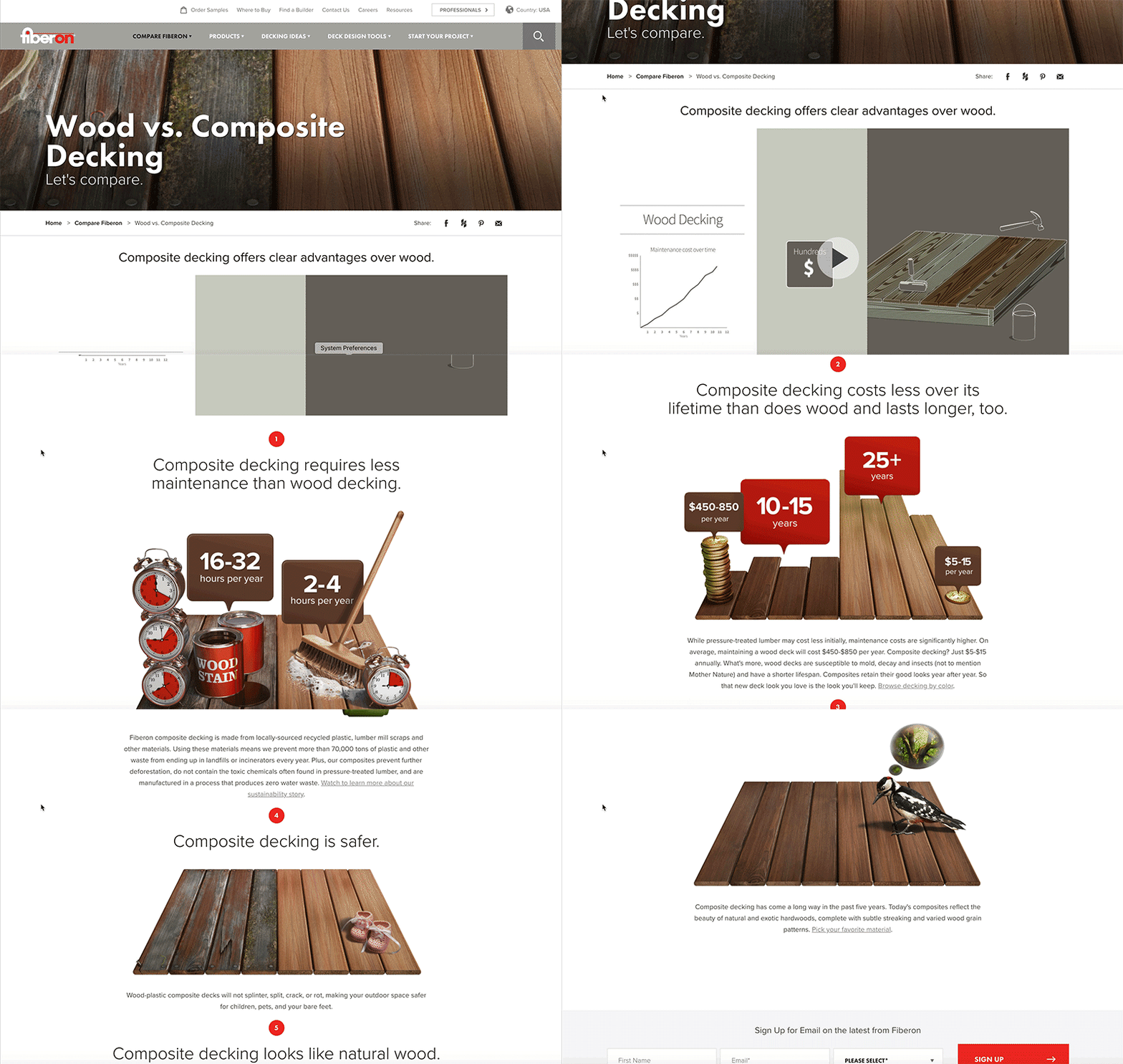
Fiberon Decking has an entire page dedicated to explaining why you should spend more money on their composite decking versus choosing wood, a cheaper option. They use clear language and graphics to help convey their point. It’s a great way to be transparent about your pricing AND show the value at the same time.
Reviews are also extremely important. These include written reviews on Google, but also YouTube and other third-party websites. See how you rank on Google when you tack on “reviews” after your product name. Look at industry influencers who are promoting products and partner with them to create reviews for you.
This ongoing shift to online research should be an eye-opener to the industry, especially because an effective reviews strategy takes time to build.
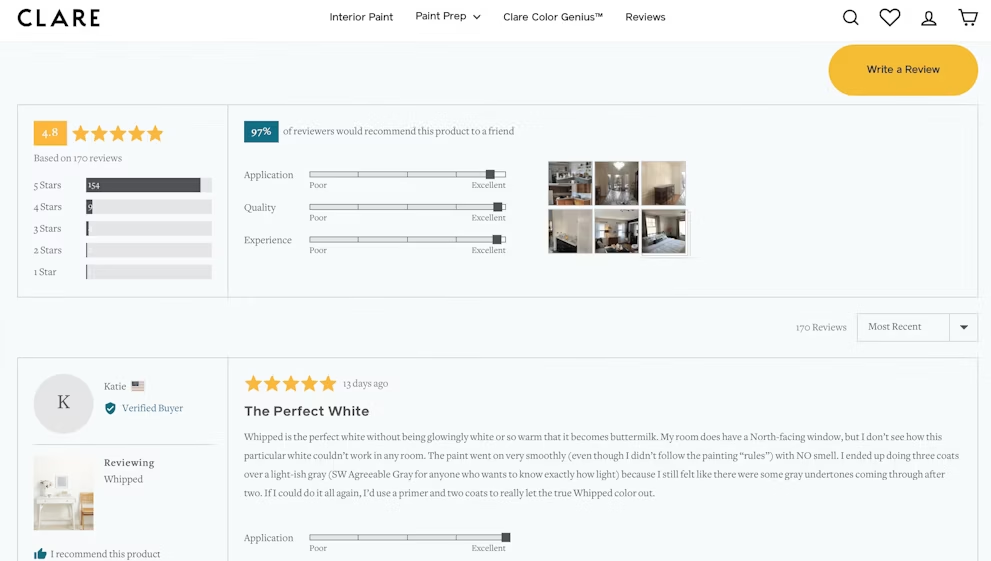
For a great example, check out Clare, a paint manufacturer. They put reviews on every product page, letting customers rank the product both overall and on specifics, such as application, quality and experience. They can also upload images, showing the final outcome for other potential customers to see and help make their own decision.
You wouldn’t buy something from Amazon without reading the reviews first. So why are we expecting architects and builders to invest tens of thousands of dollars into building products without a robust library of reviews from their peers?
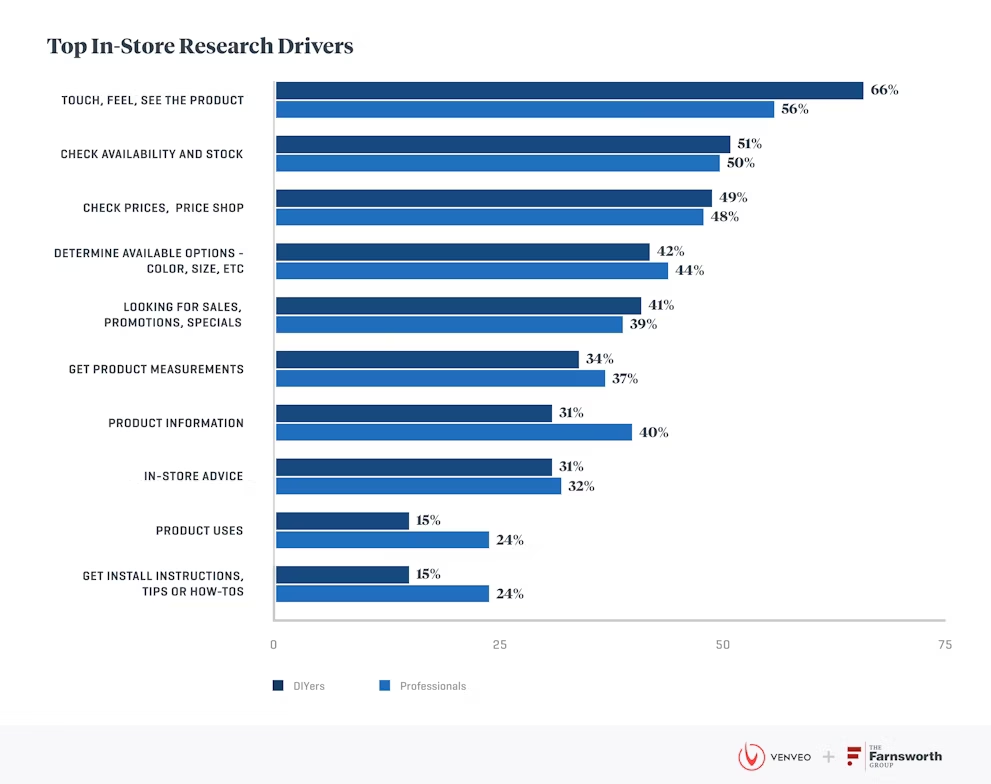
By far the biggest reason DIYers and professionals look at products in-store is to touch and feel them in person. But they’re also going to check on availability and prices. It’s easy to see that both online content and in-store information need to complement one another.
Much of this can be done by educating dealers. Be transparent with supply chain issues so sales reps can accurately estimate delivery times for customers. Dealers should also understand how you compare in terms of price to your competitors and why you might be more expensive. That means you need to demonstrate the value your product brings when sitting next to the competition.
It’s crucial for manufacturers to be where your audience is spending time. Not only are DIYers and professionals using social media platforms for personal use, but they’re also going on there to research building products.
YouTube has the most reach for home improvement research. 43% of DIYers and 50% of professionals use this platform for research. For manufacturers, that means it’s time to commit to a consistent video content strategy if you haven’t already.
Simpson Strong-Tie is a great example of a manufacturer with a strong YouTube strategy. The company’s channel has nearly 25,000 subscribers, and they consistently post videos like case studies and installation guides.
30% of professionals are active on TikTok. And some manufacturers are already capitalizing on this platform. The short-form videos on TikTok are ideal for before and afters, tips and tricks, builder series, builder collaborations, live giveaways and behind-the-scenes moments.
Here are some examples of professionals who are getting huge amounts of views on TikTok — and frequently showcasing the materials they’re using on the job.
The vast majority of both DIYers and professionals are on Facebook. 79% of DIYers and 80% of professionals use it personally. It’s where your customers are spending time, which means your brand needs to be spending time there as well.
Think about why your company attends trade shows — because your customers are going to be there. The same holds true for social media; you just need to create meaningful interactions in a different way. In addition to creating valuable social media content, you can also train your sales team on how to effectively use platforms like LinkedIn, Facebook and Instagram to share valuable content, foster relationships and even close deals.
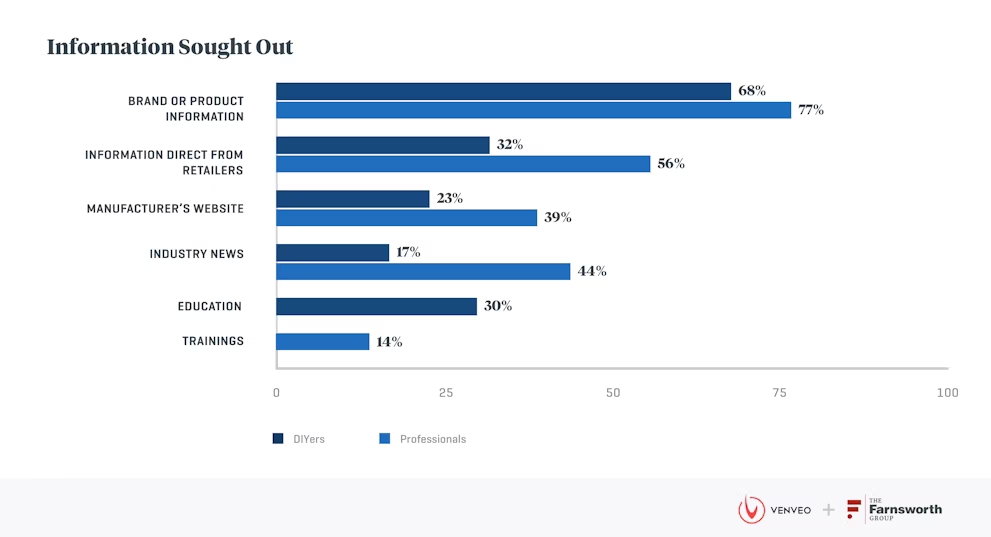
Both DIYers and professionals cite brand or product information as the top piece of information they’re looking for. The second most common answer was information direct from retailers; although interestingly, professionals were far more likely to want this information.
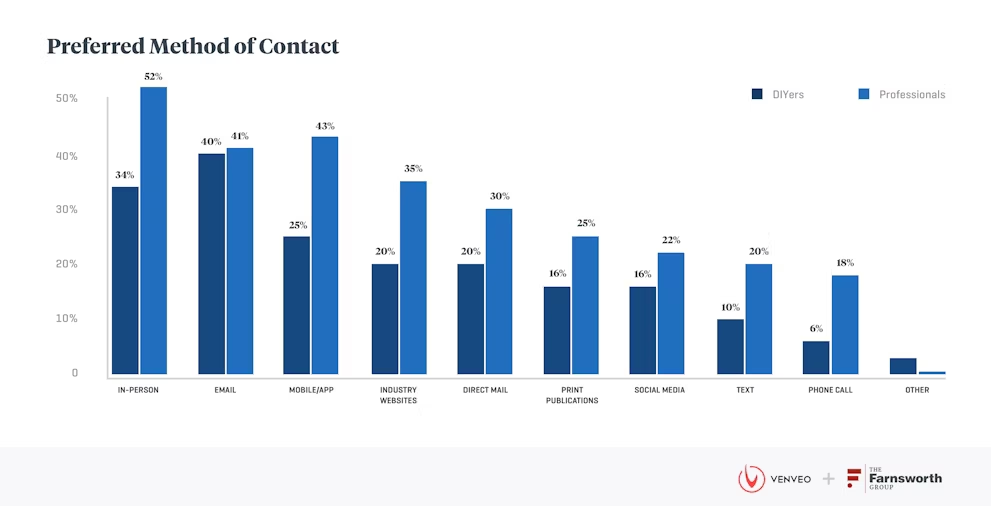
Professionals have a higher preference for in-person communications than DIYers. Pros are accustomed to regular contact with their manufacturer reps, and that’s not going away.
And while a lot of marketing professionals wonder if email is dead, the survey data disagrees: 40% of both DIYers and professionals prefer this type of communication.
DIYers are less likely to want direct mail. But that’s not surprising given that most mailers are generic. Direct mail can still generate results when it has a strategic direction beyond mass, generalized mailings.
It’s also interesting to note that millennials prefer more information, not less, regardless of how you communicate with them.
Both professionals and DIYers are willing to try new brands. If you have a product that is better quality than your competitors, now is the time to push that message, as quality is a top driver for all audiences when switching brands.
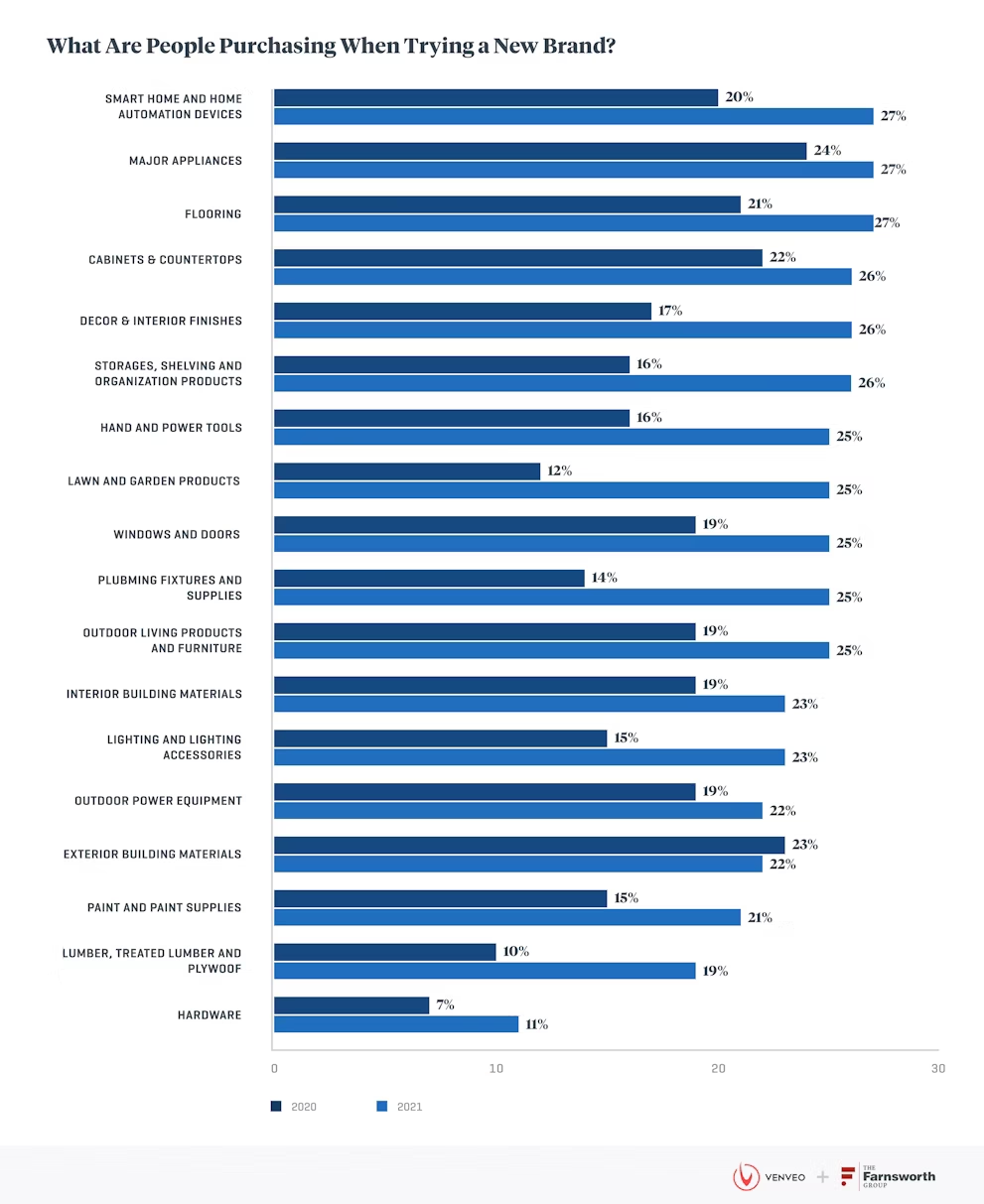
For most categories, roughly 15%-20% of DIYers and 22%-27% of professionals purchased a new brand in the past year, with smart home/home automation devices, major appliances, flooring and cabinets/countertops topping the list for both DIYers and professionals.
We saw a pretty big jump in almost every single category, especially from professionals. So what does this mean?
Now is the time to go after new market share. The industry is ready to try new brands across all categories, so you have an unprecedented chance to convert people to loyal customers.
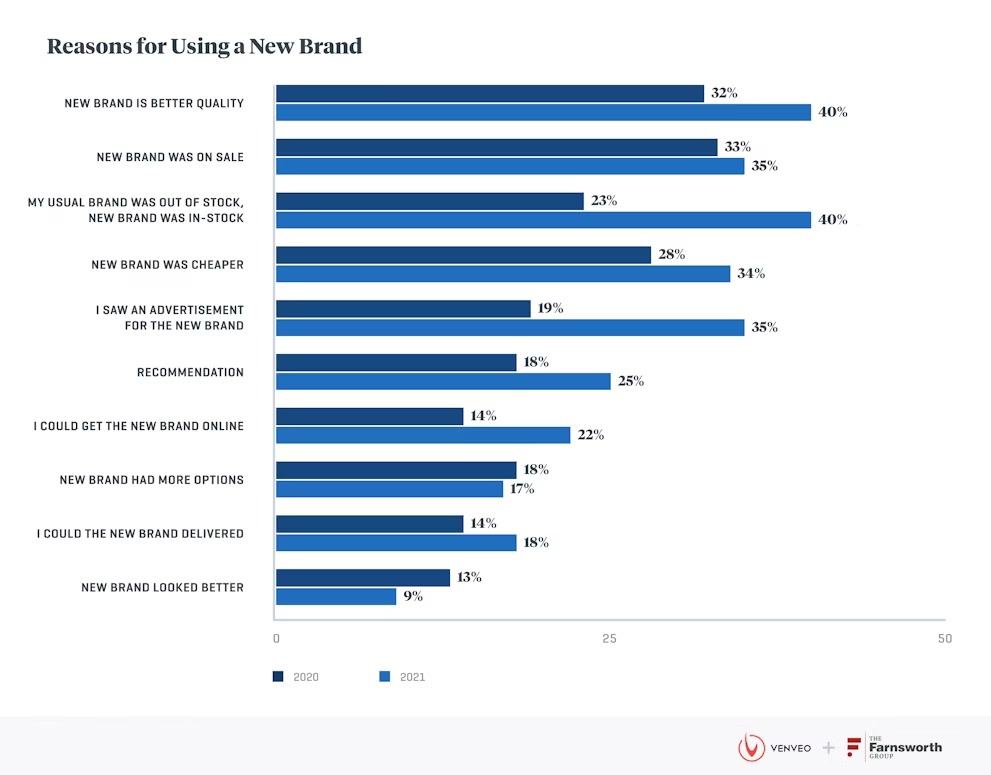
Professionals switched brands for a better quality product (40%), their usual brand was out of stock (40%), the new brand was on sale (35%), because they saw an advertisement (35%) or the new brand was cheaper (34%).
DIYers really had three top drivers for purchasing a new brand: the new brand was on sale (33%), better product quality (32%) or the new brand was cheaper (28%).
The name of the game here is quality. Everyone across the channel wants higher-quality, dependable products. Of course, availability is a factor that is always going to be at play, but this quality message is really important. They don’t have time to waste on products that are unreliable or break down too fast.
Manufacturers often promote their product as better quality, but in the past, that’s rarely moved the needle on its own. These results show us that message is getting through.
In today’s market with high demand and squeezed availability, everyone is pressed for time. If your products can offer improved quality and (even better) reduced installation time, now is the time to make that clear in your message.
What’s more, if those value propositions can be coupled with online ordering, quick fulfillment or job site delivery, you’re going to win more business because these issues are starting to cost professionals jobs.
More professionals bought a new product because they saw an ad than because of a recommendation. That is huge.
Professionals are essentially saying, I trust the ads I see even more than I trust the recommendations I am given by friends or family. We’re starting to see a consistent drumbeat here of professionals looking to the web and trusting what they see online.
Availability has continued to be a pain point throughout 2021, and we predict it will continue next year as well. Companies struggling with product availability should shift the focus from the products they can’t talk about to the brand that’s still there to support their customers however they need.
Your reps should still be available to troubleshoot project issues. Your content, website and social presence should be more alive than ever. Fill them with helpful information you know your customers need.
Don’t let a lack of product push you off your customers’ radar. Creating valuable content also means your reps will have something more to say than bad news when talking to customers.
Brands that focus on positioning themselves well now will have a better chance to win customers back when inventory levels return next year.
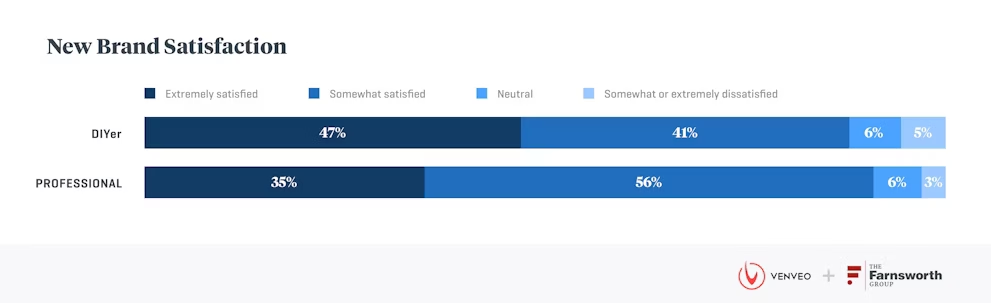
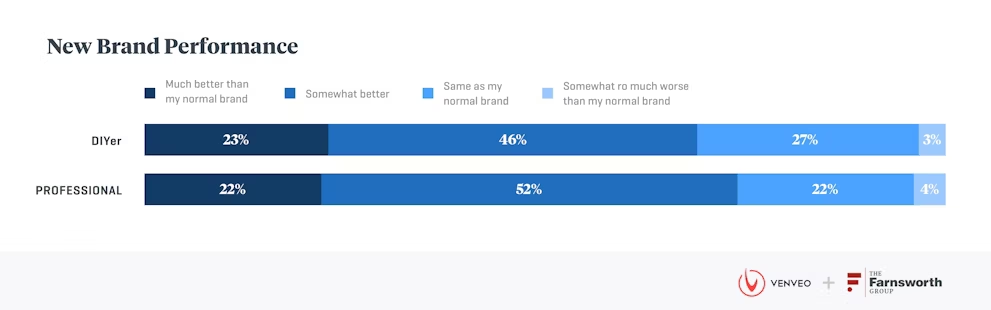
If you get DIYers and professionals to try your brand, they’re likely to stay. Both reported high satisfaction with their new brand purchase. Boomers were more likely to say they are extremely satisfied with their new brand (60%) relative to Gen X (44%) and millennials (40%).
Commercial builders/GCs (97%) and architects/engineers/designers (95%) are more likely to be satisfied by their new brand relative to residential (86%) or Commercial (85%) specialty trades. Homebuilders (83%) and architects/engineers/designers (83%) are more likely to perceive the new brand as better than their previous brand relative to specialty trades and residential GC/remodelers.
What do we see here? Opportunity. Manufacturers have a huge opportunity to get new business because both DIYers and professionals are willing to try a new brand AND are willing to stay with it once they do. Of course, that depends on a few factors.
We’re seeing a return to big box store purchases for DIYers and professionals both. While the pandemic saw an increase in traffic to Amazon, 2021 saw a drastic drop, as everyone found they could get better, more specific products at Lowe’s and Home Depot.
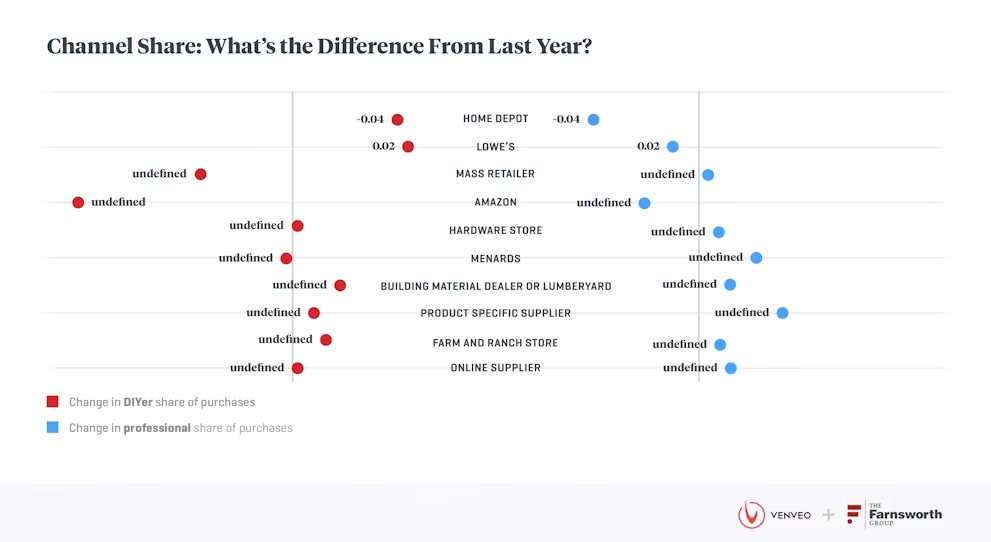
A year ago, we saw Amazon take a large leap in purchases due to the pandemic. This year, we see a shift among DIYers away from Amazon (-6.7%) and back toward Lowe's (+2.9%) and Home Depot (+2.7%), and this is at least partly because we have seen an overall return to in-store purchase behavior.
We also saw a bump among professionals last year toward Amazon due to the pandemic. This year, we see a dip in purchasing through Amazon (-2.3%), Home Depot (-4.9%) and Lowe's (-0.9%). This share has transferred back to Product Specific Suppliers (+2.7%), LBMs (+0.9%) and Online Suppliers (+1.2%).
It's no surprise to see pros move away from Amazon and big box stores. Professionals often prefer purchasing through their local dealer and distributor networks as they have relationships there and trust the sales team to know the industry and building products.
This shift also follows the trend of stores now being fully open this year compared to last. There are also customer segments that prefer in-store (boomers), who are now comfortable being back in-stores. Plus, there are younger generations that often need how-to advice they can get from store associates.
Professionals want specifics, too, and they want to be tailored to. So they are going back to their local dealers and distributors. It's a return to the channel that provides the most support and access to the specific products they need.
While the home center and home improvement store are certainly alive and well, their increased share this year has not been at the demise of online purchase activity.

Most channels have seen an uptick in purchases made in-store from last year. However, none of them have returned to the share of purchases made in-store pre-pandemic — and it’s likely we will never see a complete return to pre-pandemic in-store purchases.
Depending on the channel, DIYers are still buying between 70%–80% of their products in-store. Boomers are much more likely to make a higher portion of their purchases in-store rather than online, whereas millennials are more likely to purchase online.
For professionals, this percentage is between 50%–60% in-store. Residential GCs/remodelers, homebuilders and residential specialty trades are also more likely to make their purchases in-store.
If you don’t have an ecommerce site set up, you need to get one started ASAP. The pandemic pushed forward the move to purchasing building products online, and it’s not going to go away. In fact, with boomers aging out of the industry, we’re going to continue to see an increase in online purchases. If you aren’t set up online, you’re going to continue to see a drop in your sales in the coming years.
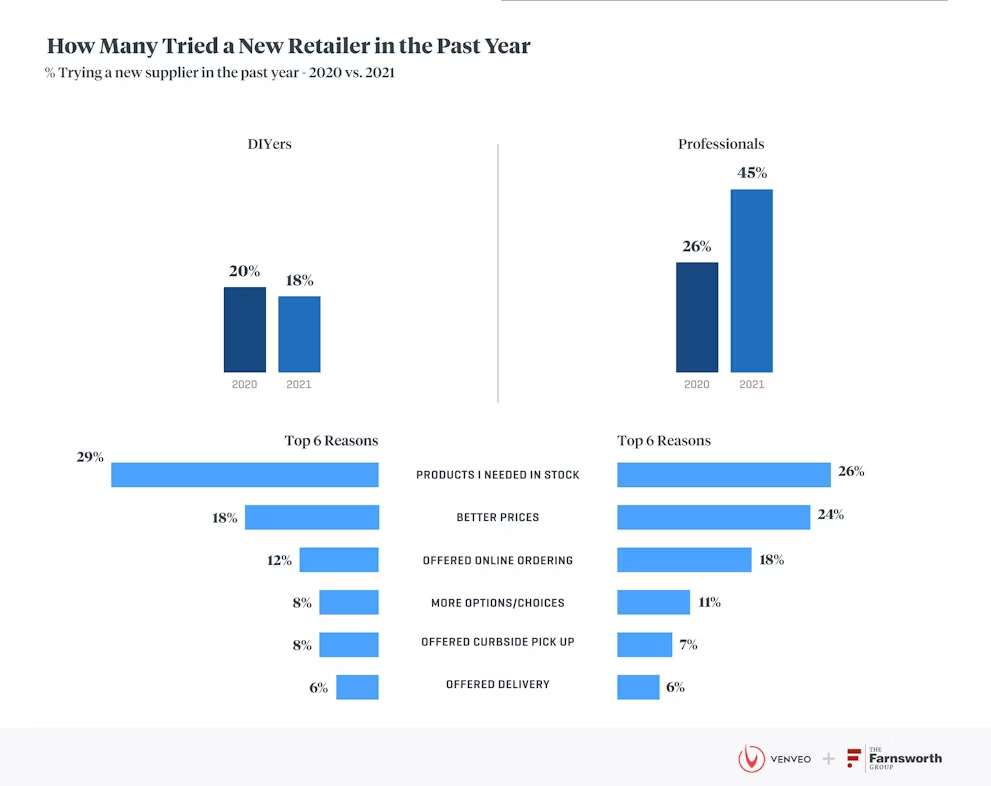
Compared to last year, a similar portion of DIYers tried a new home improvement retailer in the past year. 45% of professionals indicated trying a new supplier in the past year compared to only 26% last year.
When asked to select the primary reason why, both DIYers and professionals indicated availability and pricing as their primary reasons.
DIYers and pros are always going to go to the retailer that has the products they want. So it’s no surprise to see a similar set of customers trying a new retailer in 2021 to get the products they want and the best price.
But what stands out here is the number of pros switching retailers because the new retailer offered online ordering: 18% made the switch for the convenience of ordering online. Another 13% switched because the retailer offered curbside pickup or delivery.
The continued preference for efficiency and convenience in the pros purchase journey highlights the importance of focusing on not only what products you offer, but how you’re making it as easy as possible for pros to buy from you. You know they want online ordering and job site delivery, so now is the time to look at your sales and delivery methods to solve these pain points for them.
As you plan for 2022 and beyond, take time to pause and review your results from last year. Here are a few questions to ask in your planning sessions:
1. What were our goals for leads, opportunities and closed/won revenue?
2. If you could wave a magic wand and achieve one thing in your marketing and sales efforts in 2022, what would that be and how would you measure its success?
Now, look at the data included here, and apply the insights to what you know is working and what isn't within your marketing landscape. You should be able to uncover some reasoning behind why some pieces worked and some didn't based on how your customers are interacting with brands and buying products.
As you set new business goals for 2022, review the data to identify gaps in your marketing strategies and tactics. Make a plan to strategize, create and launch the needed marketing support pieces to get the results you want.
Finally, remember: If you can't measure it, don't do it. Meaning, your marketing tactics should have clear, realistic goals and KPIs to help measure success and identify opportunities for improvement.
There are nine key marketing strategies you should implement, once you know where your opportunities lie: research, brand messaging, marketing automation, SEO, search ads, social ads, content and social media, website and ecommerce.
Before you can begin to plan for 2022, you need to do your research. This report can help point you in the right direction to start, but you should do a deep dive into your own data and see where you need to focus your digital marketing efforts.
Want to learn more? Keep reading here:
Friendly reminder: Your messaging is not about you. It's about them. Your potential customers need to solve problems and pain points, and your messaging needs to quickly and clearly communicate that you're the product that can help.
Want to learn more? Keep reading here:
Email is far from dead, as the data in Chapter 4: Section 7 shows. Take a look at what newsletter(s), emails and lead nurture campaigns you are sending (or aren't sending), and look for opportunities to improve opens, clicks and conversions.
Want to learn more? Keep reading here:
SEO is a long game, but it's incredibly important. Auditing your website for technical issues and content gaps that are hurting your search ranking is the perfect first step as you plan for the coming year's marketing and sales initiatives.
Want to learn more? Keep reading here:
SEM (search engine marketing) allows you to show up on the first page of Google and other search engines quickly. To do that, you need to make sure your website, search ads and landing pages are optimized for Google's new core web vitals and follow other SEM best practices.
Want to learn more? Keep reading here:
Social media is only growing, and if you want to be seen by your audience, you need to advertise where they are. Social ads can both grow awareness and capture leads.
Want to learn more? Keep reading here:
If you want to position your brand as a trusted resource, you need a blog. If you want to grow brand awareness, you need social media. Don't discount YouTube, TikTok, Instagram and Facebook: They are all just as important as using LinkedIn to gain visibility.
Want to learn more? Keep reading here:
Your website is where your audience is going to go to learn about your products and even make a buying decision. If you set it up correctly with proper SEO best practices, they're also coming to your website when they are just starting their research. Make sure it's ready for them.
Want to learn more? Keep reading here:
Ecommerce is seeing continued growing demand across the channel, but it's a long-term play that takes significant strategic and logistical lift. Make sure you put time and effort into the research stage to ensure that you give them everything they need, including transparency on inventory levels, pricing, shipping cost and times, etc.
Want to learn more? Keep reading here:
The Farnsworth Group can help you dig deeper into the results and offer suggestions on getting the best insights for your business needs.
Without a clear picture of your competition's digital strategy, it's harder to see the gaps and opportunities on your own. Venveo can help you dive deep into your competition's digital marketing strategy, and show you how to dominate your competitive landscape and grow leads and sales. Let’s get started.