Loading preview...

Start a project
Reach out to us for any inquiries or support.

Contact
We’re here to help you with all your needs.

Call Us
Get in touch with our team anytime.
How We Help
Why Venveo
Resources
Get weekly data — and insights.


Venveo is an award-winning digital marketing solutions provider. Since 2003.
©2026 Venveo

Zach Williams
Owner & Founder, Venveo
From channel conflict to fulfillment to hefty shipping costs, there are plenty of reasons building materials companies are concerned about launching ecommerce. But if 2020 has taught us anything, it’s that change is inevitable, and all the reasoning in the world can’t explain to a customer in need why they can’t easily buy your products.
Now more than ever, it’s essential that you think about how your business can succeed in today’s digital-driven economy.
This year has created a great opportunity for all types of businesses to thrive online. Because of COVID, ecommerce is now everyone’s expectation in both B2C and B2B markets. In fact, B2B online sales across industries are three times as large as B2C sales.
It’s time to stop viewing ecommerce as the competition and think about how you can leverage your online presence to increase market share, grow relationships, create new sales opportunities, and grow demand for your product.
Let’s take a look at five of the best ecommerce sites out there and what you can learn from their success.
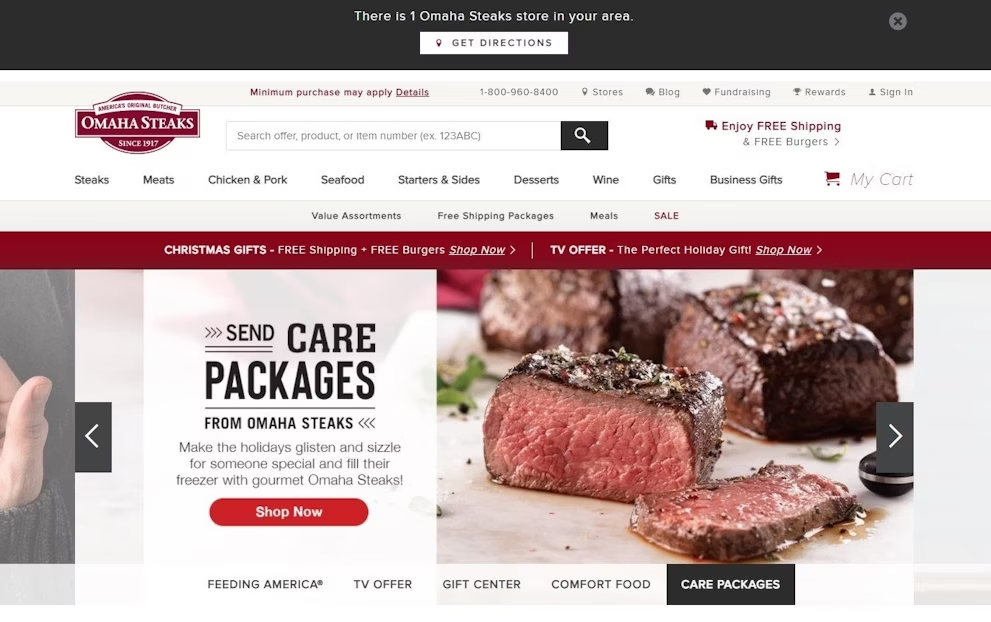
Omaha Steaks has one of the best ecommerce sites in the business because it’s easy to use and provides solutions for their entire customer base.
Customers can view multiple offers, get meal ideas, gift suggestions, watch how-to videos, and add products directly to their cart — all from their homepage. It doesn’t matter if you are using their website, the mobile version of their site, or their app, the experience is consistent.
While their older demographic tends to utilize their desktop site, Omaha Steaks’ mobile app attracts a younger customer base and gives them a similar browsing and shopping experience in a format they are more comfortable using.
Omaha Steaks knows that when you work hard to give your customers a great digital experience, it will show them you are a customer-first business. This means doing your fair share of research about your client base and understanding what makes them tick. So, what does this mean for your company? Where should you begin with your online marketing?
As a building materials company, your ecommerce experience should allow your customers to select products based on their needs: through vertical, building type, or specific product requirements. The same contractor may need to shop different ways depending on the project, and they’ll be more likely to purchase through your website if they know they’ll be able to find what they need no matter how they wish to navigate to it.
A truly successful ecommerce experience is about more than putting an “add to cart” button next to your products. You need to focus on creating a positive buying experience.
Think about what makes sense for your customers. Where are they in the designing, specifying or building process when they need to purchase your product? What issues are they looking to solve or features would they want to find?
If the user experience is confusing or simply non-existent, they’ll project those feelings onto your company and likely leave your site to buy from a competitor who makes it easier to buy from.
When creating your ecommerce experience, ask yourself the following questions to be sure you have the right organizational support and the strategic planning you need:
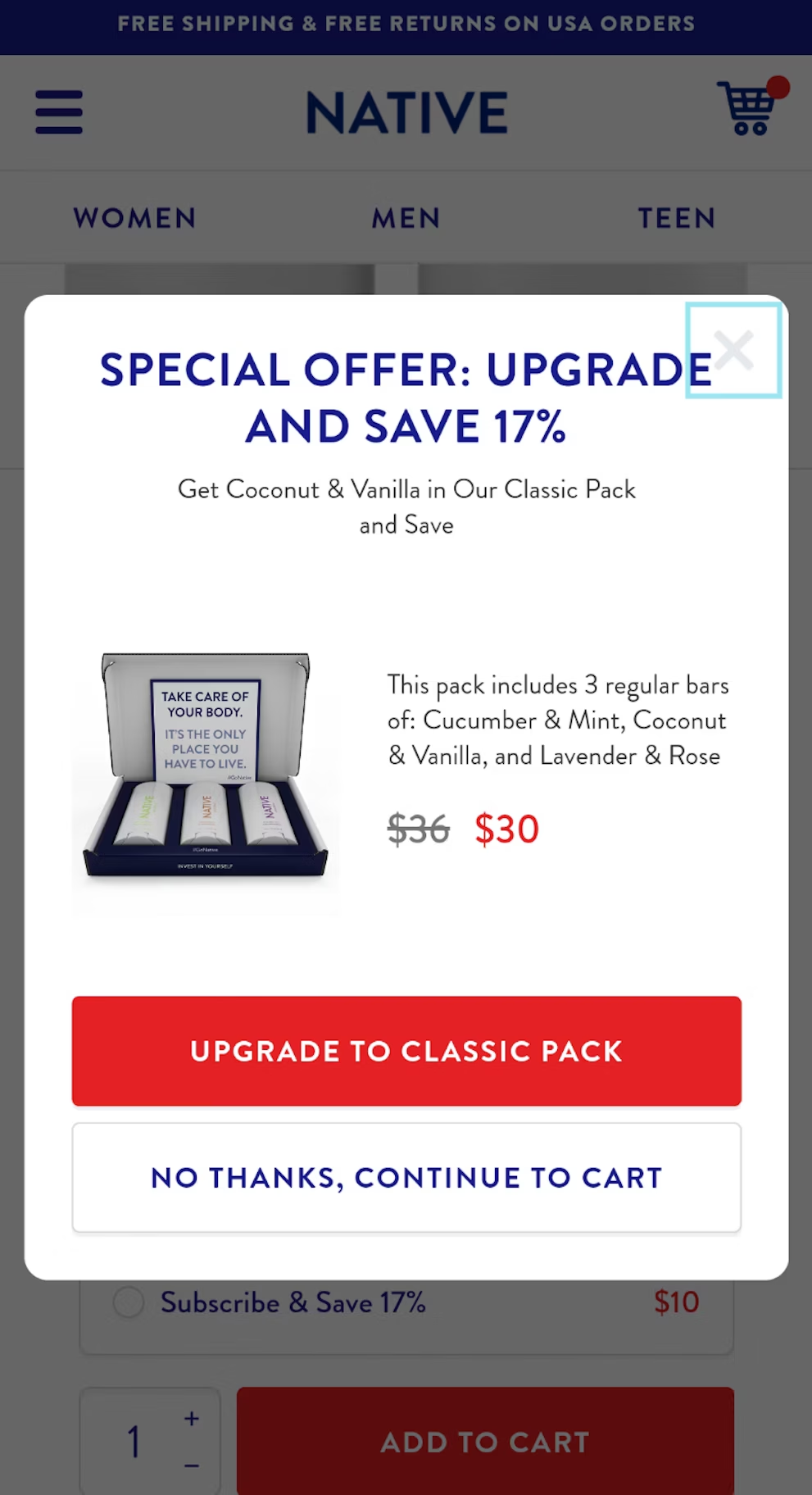
It’s common knowledge that it’s more expensive to win a new customer than to resell to an existing one. As you shop online, you’ve probably encountered several experiences like the image above. You add something to your cart, but before you can checkout, you’re offered several additional ways to increase your purchase just a little bit.
This cross-selling strategy is an incredibly effective way to make more revenue per customer while offering them additional value as well.
Native’s personal care products have a huge following online. Their ecommerce strategy is all about creating new sales opportunities for existing customers. Their direct-to-consumer model has allowed them to leverage customer data and make tailored recommendations to customers based on previous purchases.
This is likely something your salesforce has been doing for years with their customers in the field. As you bring your business online, you’ll have even more opportunities to make targeted product suggestions with a higher close rate because it’s based on data.
As a manufacturer, how can you incorporate cross-selling online without overselling? Timing is everything. You need to be strategic about when and how you suggest products and services to your customers.
There are two distinct places Native uses to leverage their products that you can use too:
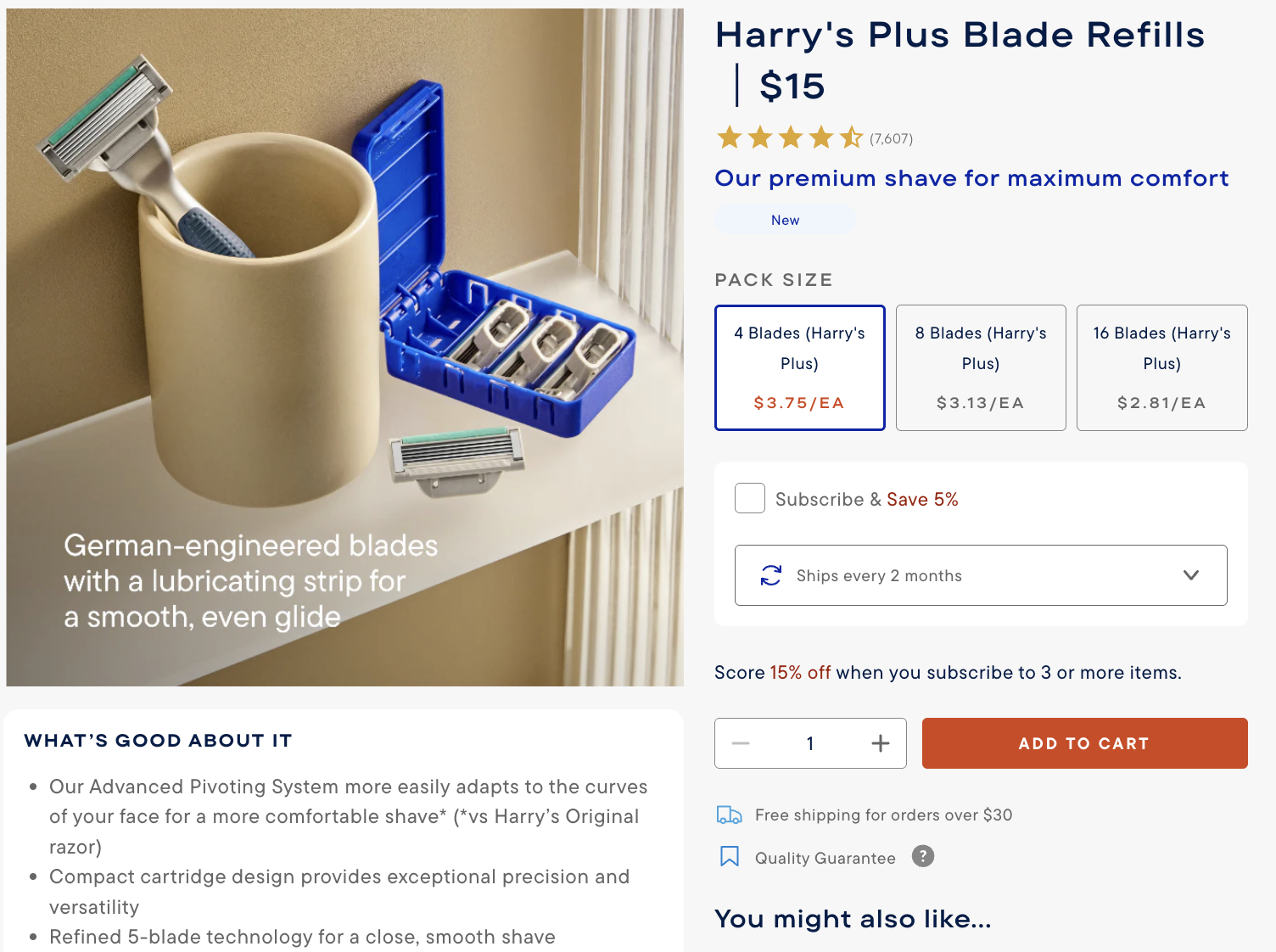
Harry’s is a direct-to-consumer company that has managed to use their website and subscription services as a high-powered marketing channel. Their subscription service provides shaving products to consumers on a quarterly basis or by a frequency selected by the customer.
Any product or service your customer buys at regular intervals is an opportunity for a subscription service. Subscriptions help you maintain a consistent customer experience, cultivate product loyalty and offer reliable revenue for your company.
What can you learn from Harry’s subscription model?
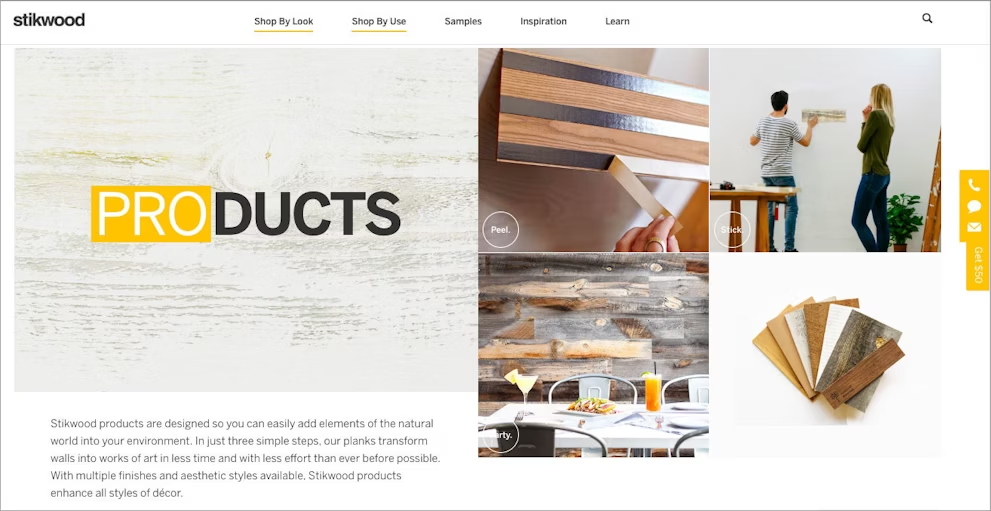
Stikwood is a DIY-focused building materials company that is doing ecommerce well. Stikwood does an excellent job of giving its customers easily digestible information.
One of the most attention-grabbing elements on their homepage is a yellow bar that says “Shop.” This immediately lets you know that you can buy their product directly from their site. They are also using customer reviews, images and videos to help explain their products, show how they are used and offer project inspiration.
But they don’t stop there: Their cart experience is also great. They give you several ways to make purchases and continue to provide helpful information throughout the process.
When creating your ecommerce store, you need to make sure you’re answering your customers’ biggest questions about your products. The main components that are necessary to do that include:
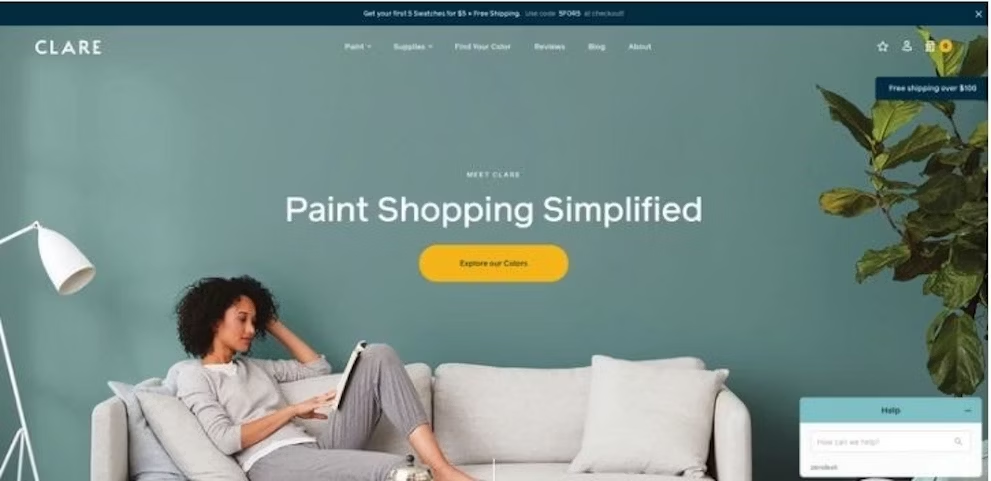
Clare offers more than just a good building materials ecommerce site; they also have a great samples program that helps customers select and purchase large peel-and-stick color swatches to test for their projects. There is no longer a need to use tiny paint chips or messy sample pots of paint. Clare’s custom-curated peel-and-stick samples are large, color-accurate samples that help eliminate a lot of the decision-making stress that comes with choosing paint colors.
Their custom configurator is a chatbot that helps select paint and calculates how much paint to buy, making the decision-making process easier for purchasers. Clare’s use of chatbots is something they do particularly well. By using technology to answer customer needs easily and quickly, they have bypassed the need for filling out forms to get quotes. Instead, chatbots converse with customers, helping them find the right paint instantly.
This is how chatbots can help optimize conversion rates. They provide a quick, one-on-one communication experience and shorten the amount of time it takes customers to get to the end of the sales funnel.
The chatbot helps Clare market their services and industry knowledge in a way that feels clean and concise. Their use of icons is also visually appealing and makes the decision-making process fun for their customers and encourages them to engage more with the site.
As a manufacturer, your customers (hopefully) already see you as an industry expert. So leverage that opinion by engaging with them and making recommendations for solutions that will solve their problem.
Why are chatbots a conversation tool you will want to have on your ecommerce site?
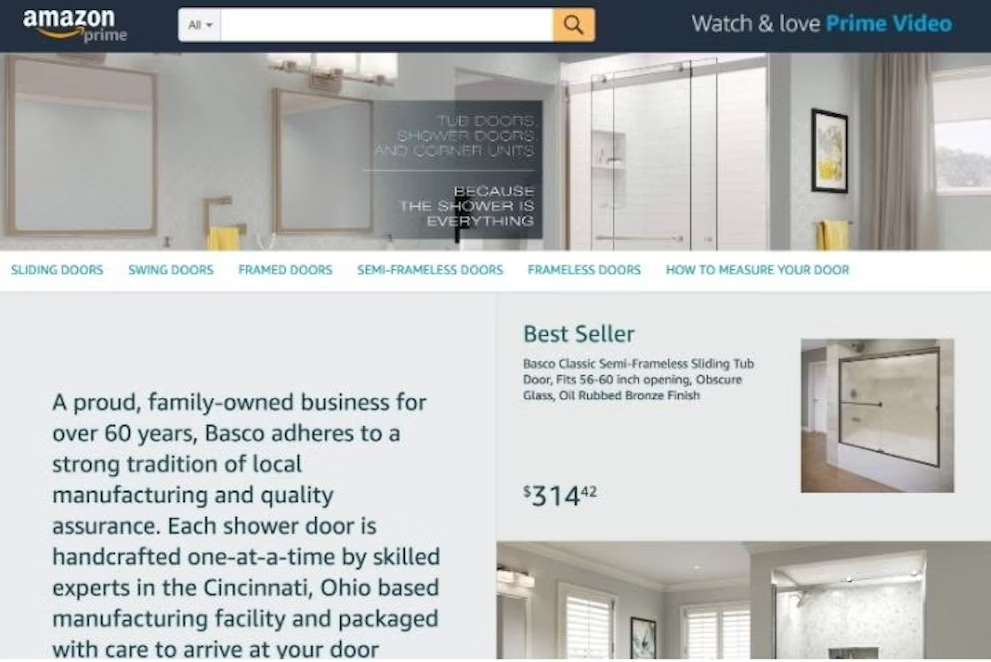
It goes without saying that competing with Amazon’s experience and platform can be a challenge, especially if you are a distributor who is new to e-commerce. And if you are thinking about also partnering with the retail giant, there is still a lot to consider — but it is not all intimidating.
Correctly using Amazon as an additional sales channel may be a step in the right direction for many distributors who are looking to improve their e-commerce success. If you choose to partner with Amazon Business and use them as an additional sales channel, you need to start with a solid game plan. Before entering the Amazon marketplace, consider these thoughts to help develop your business strategy.
Remember, you know your customer better than anyone — even Amazon. While Amazon uses its data to gain insights about its customers, it lacks the years and years of direct customer experience you have used to understand purchasing habits. Use this to your advantage when developing your strategy.
Are you ready to turn your online presence into a powerful sales tool? Venveo can help you grow awareness and drive sales. Click here to learn more about how we will help your business establish and maintain a strong ecommerce site.
Want more access to the latest data and information that impacts your business? Become an NBMDA member today and build relationships with the architect and design community.