Loading preview...

Start a project
Reach out to us for any inquiries or support.

Contact
We’re here to help you with all your needs.

Call Us
Get in touch with our team anytime.
How We Help
Why Venveo
Resources
Get weekly data — and insights.


Venveo is an award-winning digital marketing solutions provider. Since 2003.
©2026 Venveo

Beth PopNikolov
CEO, Venveo
85% of people online in the U.S. watch videos monthly. Whether it’s general content about your business or detailed information focused on a specific product or project, videos can help you create more consumer engagement, increase website traffic and boost sales. Today, getting access to high-quality cameras, or even just your smartphone, makes developing a solid video marketing strategy well within everyone’s reach. Let’s explore a few ways to effectively incorporate building materials videos into your marketing plan.
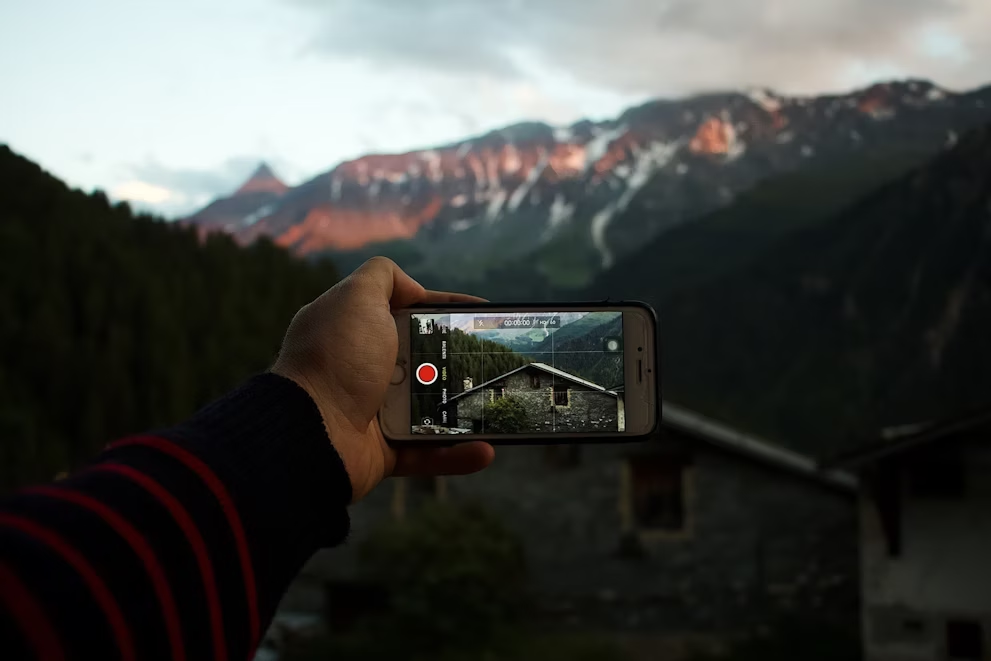
Videos offer a great opportunity for your customers to get to know you as a company and better understand your products and services. Here are some ways video marketing efforts will enhance your overall marketing strategy.
Video is considered a more engaging communication tool because your audience can listen to it passively. In fact, 80% of online visitors will watch a video, while only 20% will read content.
Video is a great way to easily communicate complex content. Video makes your products, your ideas and your brand's persona easier to digest.
If your products accomplish a complicated task, videos can be a seamless way to showcase your process and explain why it's better, simpler or more sophisticated than your competition.
Contractors, dealers and DIYers can all benefit from video content, especially when it comes to how-tos and instructional videos. It’s interesting to note that almost 90% of DIYers watch videos from building materials companies when they’re researching projects. Even if you don’t target the DIY Consumer, building materials companies are starting to realize the value that level of engagement can bring, which leads us to social media.
93% of marketers say they’ve landed a new customer because of a video on social media.
Video is highly prioritized by social media platforms like Facebook, Instagram and LinkedIn. These platforms give larger exposure (both organic and paid) to video content compared to images or text content.
For example, Facebook’s algorithms prioritize video because it’s the most effective way to combine emotional and rational communication. Purchase decisions boil down to emotions, and video can help reach your customer’s emotional level more quickly and effectively than other mediums.
Social media platforms also want to accumulate more video content (and views and engagements) on their platforms, instead of sending their users to YouTube.
The good news is you don’t need a huge marketing budget to pull this off; instead, focus on human interest stories with specific types of video. Examples include live videos where employees share their stories and behind-the-scenes of what goes on with the product before it gets to the customer.
When you use relevant keywords in your video title, you are increasing your video’s chances of appearing in search results, which drives traffic to your content. For example, a title like “Reclaimed Wood Flooring Design Ideas” is much better than “Floor Promo Video” because it tells viewers exactly what your video is about.
It’s also important to provide a good description of your content. This informs search engines about the type of information in your video to help with its ranking. Also, always give viewers an opportunity to learn more about you and your products by providing links back to your company’s website.

When it comes to making content relevant and engaging for your intended audience, there are a few things you should consider and define as you are planning your video content.
Identify the audience and the goals of your video campaign. Depending on the intent of your video, your audience could be very broad or targeted to a specific group of industry professionals.
Instead of simply focusing on the hard facts of your business, think about what is most important and relevant to your audience and use that information to guide how you talk about your products and services. What would they find unique and interesting about what you offer? What need does your business solve? This will help you create a more lasting connection with your audience — one that they will remember and share with others.
Spend some time understanding your audience and how they interact in the digital world. This will allow you to pick the best messaging approach, and then execute it in the proper digital channels. Just make sure that you include your branding in the video, so viewers know that you produced it.
Don’t forget to ask for the sale by including a call to action (CTA) before and after your video.
You don’t need a big production budget or filming schedule to create a successful video. With today’s level of technology and filming quality, you can shoot a quick video on your phone and people will still want to watch it. And, we’ve actually found that handheld videos often perform better.
Here’s a great example from Huber Wood where an employee jumps on a piece of flooring panel from competitors, breaking each one. When he gets to the Huber brand, it stays strong. This video is clearly shot in the warehouse with someone’s cell phone, but it’s still compelling and authentic.
As we have already mentioned, select content that your audience will find relevant, interesting and worth watching. One way to do this is by using a “guest star.” This can be a relevant stakeholder in your industry, someone who clearly represents your intended audience, or another team member or corporate partner who would be considered a knowledgeable source.
For example: If your target audience is interior designers and you sell shiplap, you could partner with a designer influencer to create a how-to video showing how to install the shiplap for one of their current projects. That designer will then share the video with their own followers, who are eager to engage with this person and purchase whatever they suggest.
Having these types of industry experts talk about your products or demonstrate how they work can quickly establish trust and value, which is important to the buyer’s journey.
There are several ways video can help educate your audience about your products and services. Ideally, your videos should range from one to five minutes, depending on the content. Videos that promote your brand will be on the shorter end, and other videos like demonstrations or how-to videos will be longer.
To get a little more in-depth, following are six types of building material marketing videos you can use to elevate your overall marketing strategy
Testimonials are ideal for showcasing how your products and services have helped solve a problem for your customers. The best way to create this type of video is by starting with the end result that the potential customer wants. Then frame a customer interview around how to do something great in your category.
This Atlas video is a good example of a homeowner testimonial that details the entire experience using Atlas products or their project solution. Not only can you see the product at work, but you also hear why they chose Atlas and what it means to them.
How-to and product demonstration videos are great for showing viewers how useful and valuable your product can be for them. You have the opportunity to show your product at work and you are giving viewers direct insight into how your product functions and how it is best used.
In this example, Allura is detailing the products, steps and safety measures involved in installing their fiber cement products. Allura also provides several resources in the video description that directs viewers back to their website for additional product and installation information.
Much like how-to and product demonstration videos, a case study video gives a more in-depth look into how your product or service was selected and used in a project. You can include customer interviews, detail the decision-making process, show how you provided solutions for your customer and talk about the benefits of your products or services by showcasing the finished projects.
Nichiha’s “before and after” video shows the installation of their fiber cement siding. The video demonstrates firsthand how and why Nichiha’s product was selected, how it was installed and what the experience was like for the installer and homeowner.
Showing how your products are designed, manufactured and produced gives your customers a “behind the scenes” look at your processes and the level of quality and care you put into making your product. Techo-Bloc’s video shows the manufacturing process for their products, detailing how and why their processes create high-quality products that meet or exceed industry standards.
Event videos communicate that you’re a player in the space for your audience. You can create videos for events you’re going to, videos that take place while you're there or even do a recap video once the event is over.
Brand Vaughan Lumber is a company with a reputation for having a very strong commitment to service to its employees, vendors and customers. This is why promoting an event like their Brand Vaughan Golf Tournament is so important. The video demonstrates how they value business partners and uses customer testimonials to reinforce this claim.
Your participation in industry events says that you’re relevant within your category and a leader in innovation who is creating content to educate your audience. Conventions, trade shows and competitions are good examples for video coverage that show you are committed to staying current in your industry.
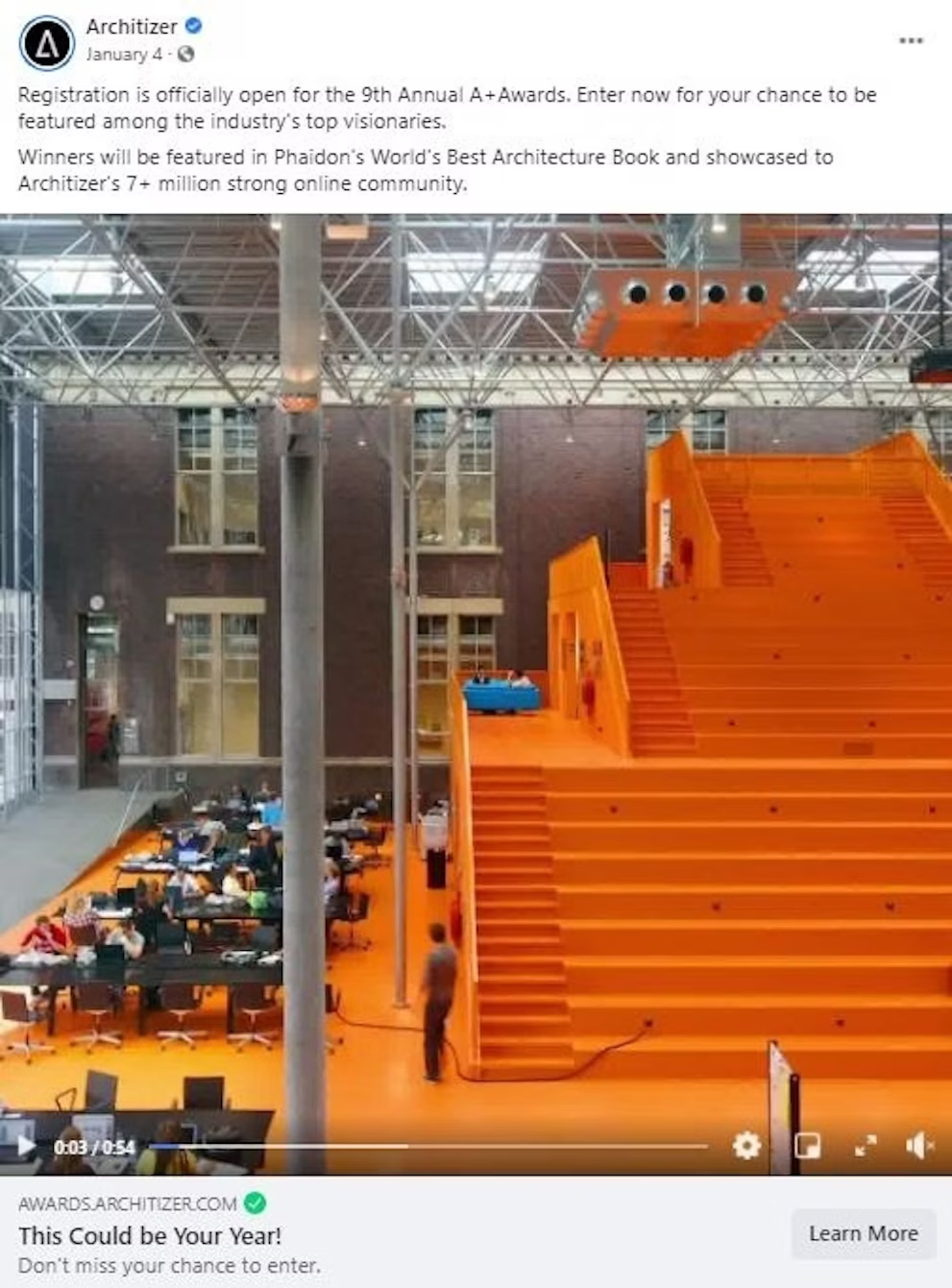
Architizer’s Annual A+Awards showcases the industry’s top-performing architectural companies and gives them an opportunity to showcase their best work each year.
Creating video content is something every building materials company should consider doing to improve their marketing efforts, especially when it comes to social media platforms.
It can deliver more information, clearly, in less time, and take up less space. When done correctly, video content strongly influences traffic, leads, sales and audience understanding
Are you ready to make video a bigger part of your marketing plan? Click here to learn more about how we will help your business develop the right video marketing strategies to enhance your product sales.
Want more access to the latest data and information that impacts your business? Become an NBMDA member today and build relationships with the architect and design community.