

Loading blog content...

Reach out to us for any inquiries or support.

We’re here to help you with all your needs.

Get in touch with our team anytime.
How We Help
Why Venveo
Resources


Venveo is an award-winning digital marketing solutions provider. Since 2003.
©2026 Venveo

91% of all pages never get any organic traffic from Google. This is because businesses make the mistake of not optimizing web pages and content for search engines. The building materials industry in particular is also slow to adopt new digital marketing strategies.
Building materials manufacturers that want to increase their online visibility, generate leads and gain a competitive advantage need good search engine optimization. It helps place your brand in front of more prospects, generate web traffic and drive conversions.
However, SEO is complicated, making it hard to properly and consistently implement. To solve this, we created a guide that will lead you through developing a building materials SEO strategy step-by-step.
Let’s begin with building materials SEO basics. Search engine optimization (SEO) refers to strategies that improve a website's ranking in search engines like Google or Bing. With an up-to-date website and marketing funnel, visits from search engines can turn into customers for your business.
There are two main components of SEO. The first is on-page, which refers to the technical optimizations you can make to pages on your website. This includes keyword research and content optimization. It may also include technical optimizations like speed, Core Web Vitals, schema markup and interlinking. All of this is considered on-page optimization. You can see other on-page ranking factors in this Moz infographic.
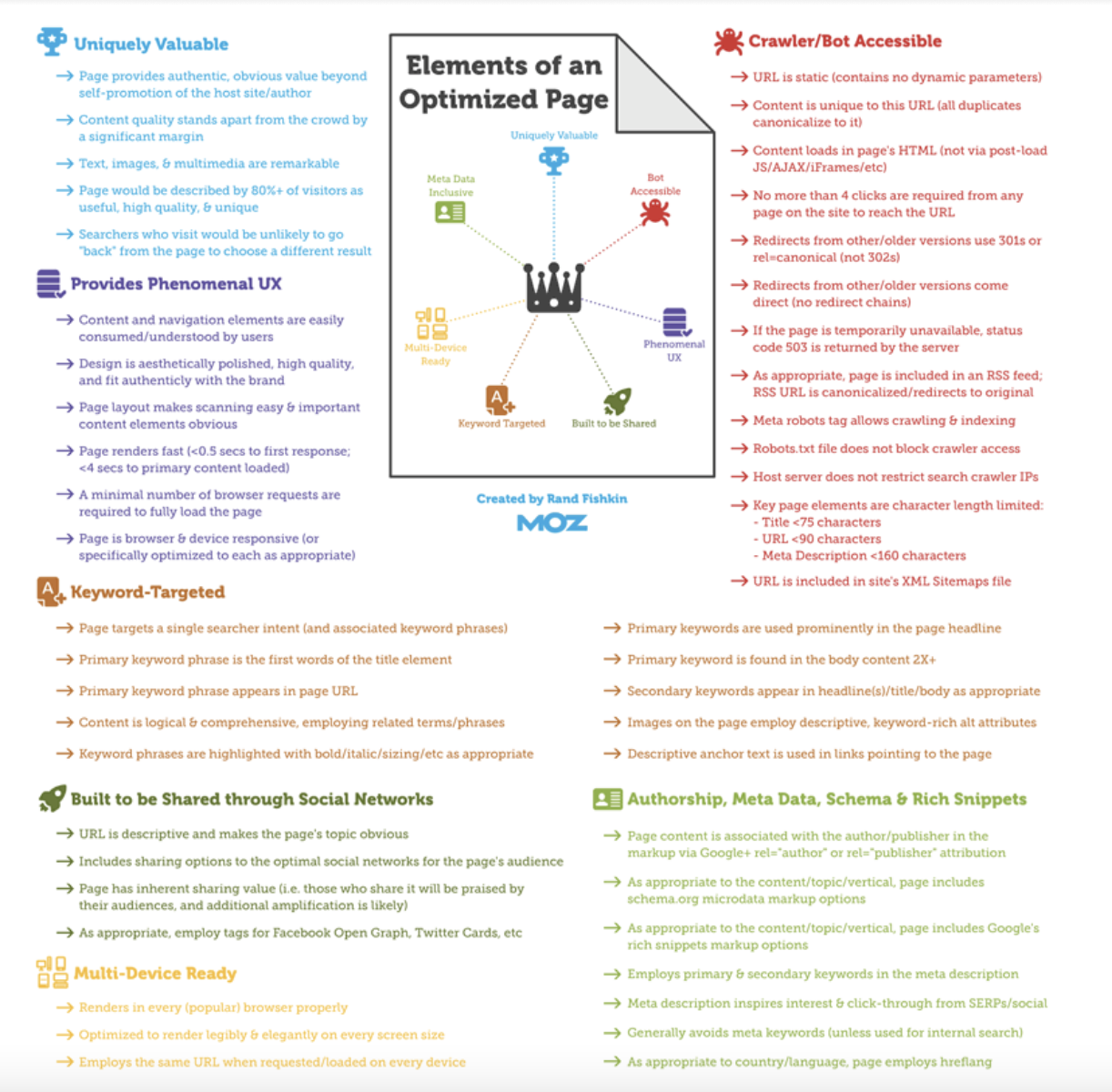
On the other hand, off-page SEO, involves optimizing things on your websites like acquiring links from authoritative sources, reputation management and creating local citations.
Before you create and execute building materials SEO strategies, let's discuss how you can analyze your current SEO performance to determine the next best steps.
Effective search engine optimization requires research and planning, especially if you don’t have an existing strategy in place. Analyzing your company’s SEO situation helps you make better decisions and focus on tasks that will make the biggest impact on rankings.
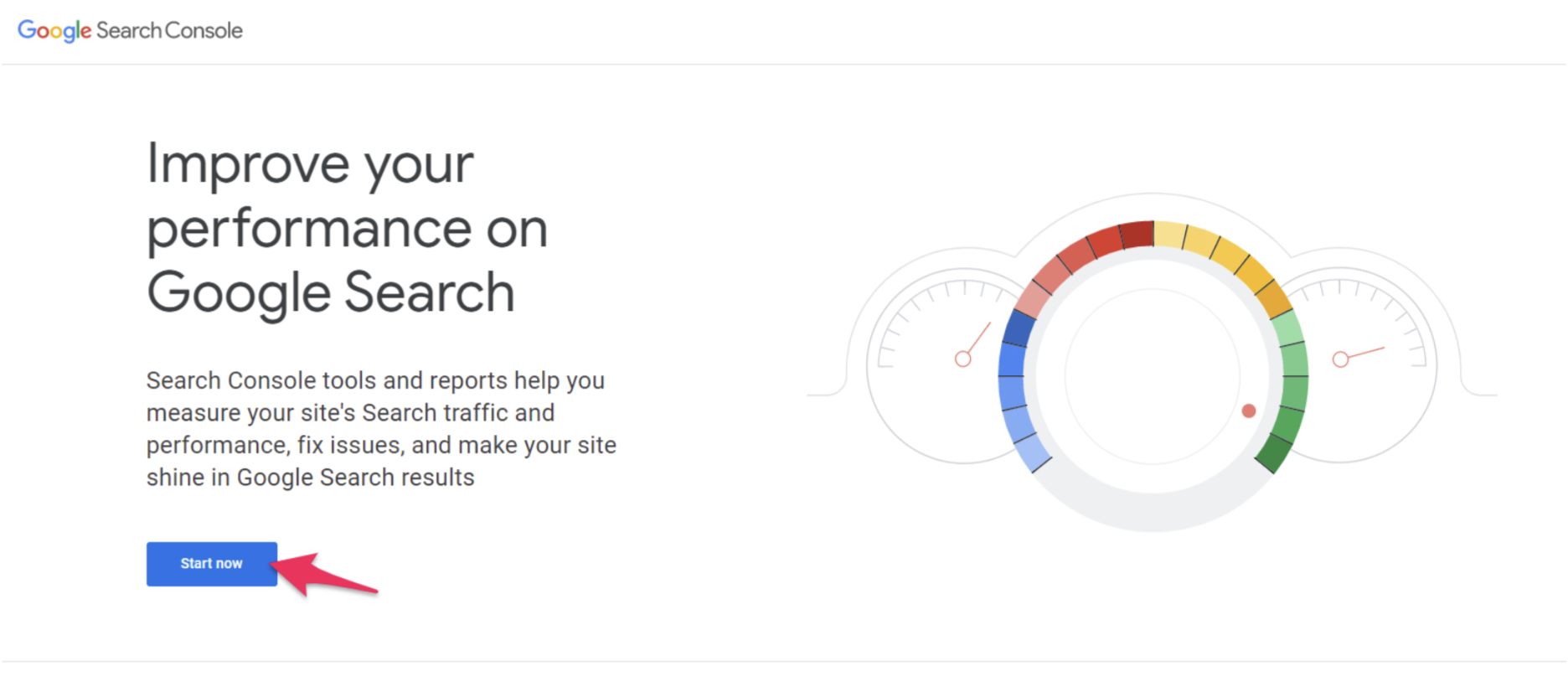
To analyze this, sign for an account on Google Search Console and connect your website during the setup process. You will have to verify the domain afterward.
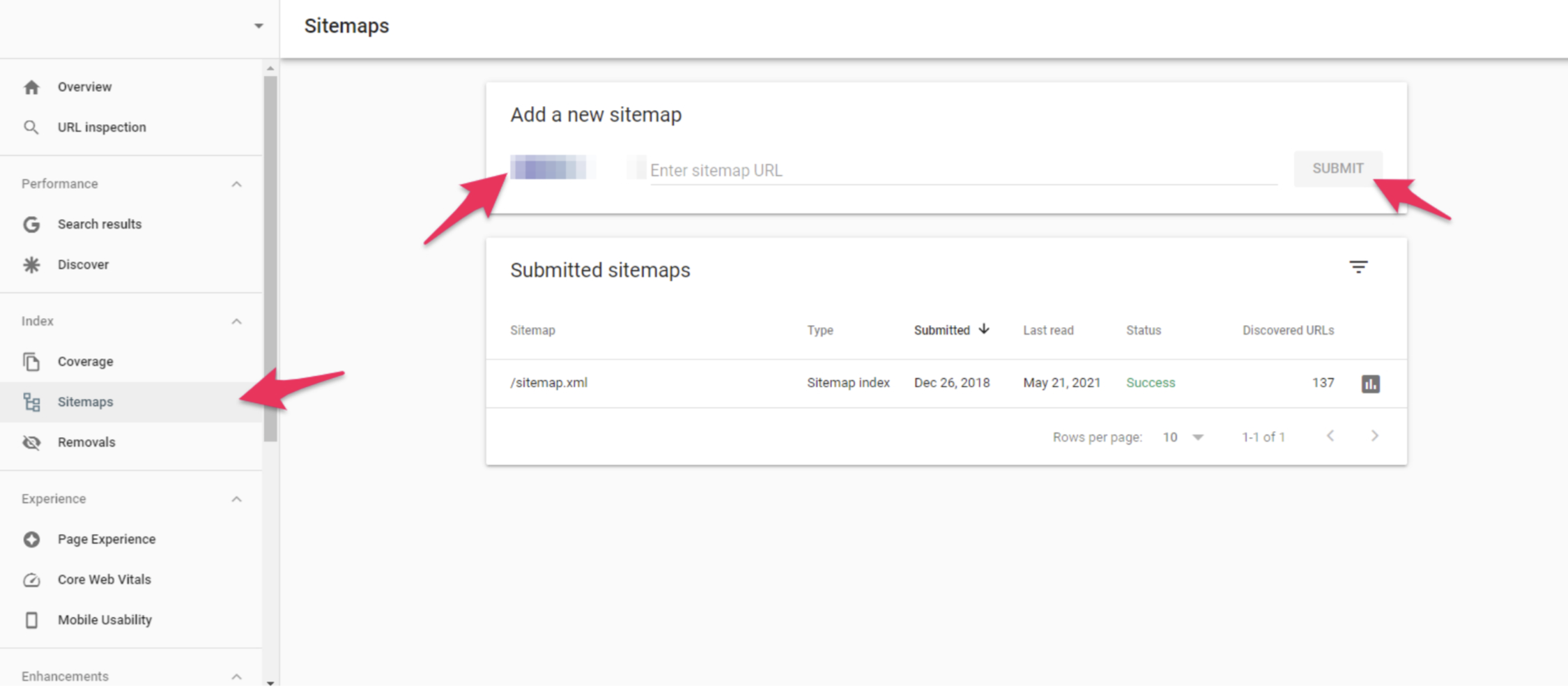
Click "Sitemap" to submit your website's XML sitemap. This is a file that helps search engine crawlers navigate their way through your pages to index them.
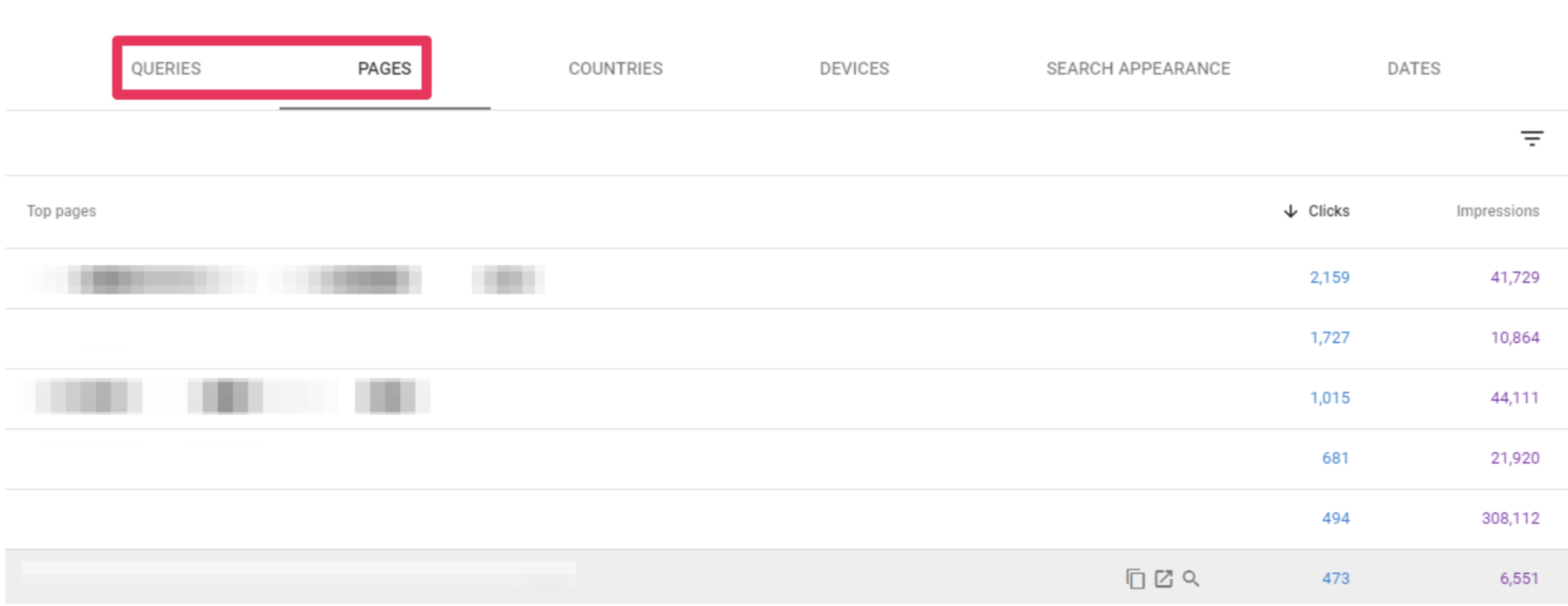
Then, click the "Search Results" tab. Here, you can see your website's impressions, rankings, click-through rate and other metrics. Ideally, you will have at least a 1% CTR. We talk about strategies later on if your CTR is lower.
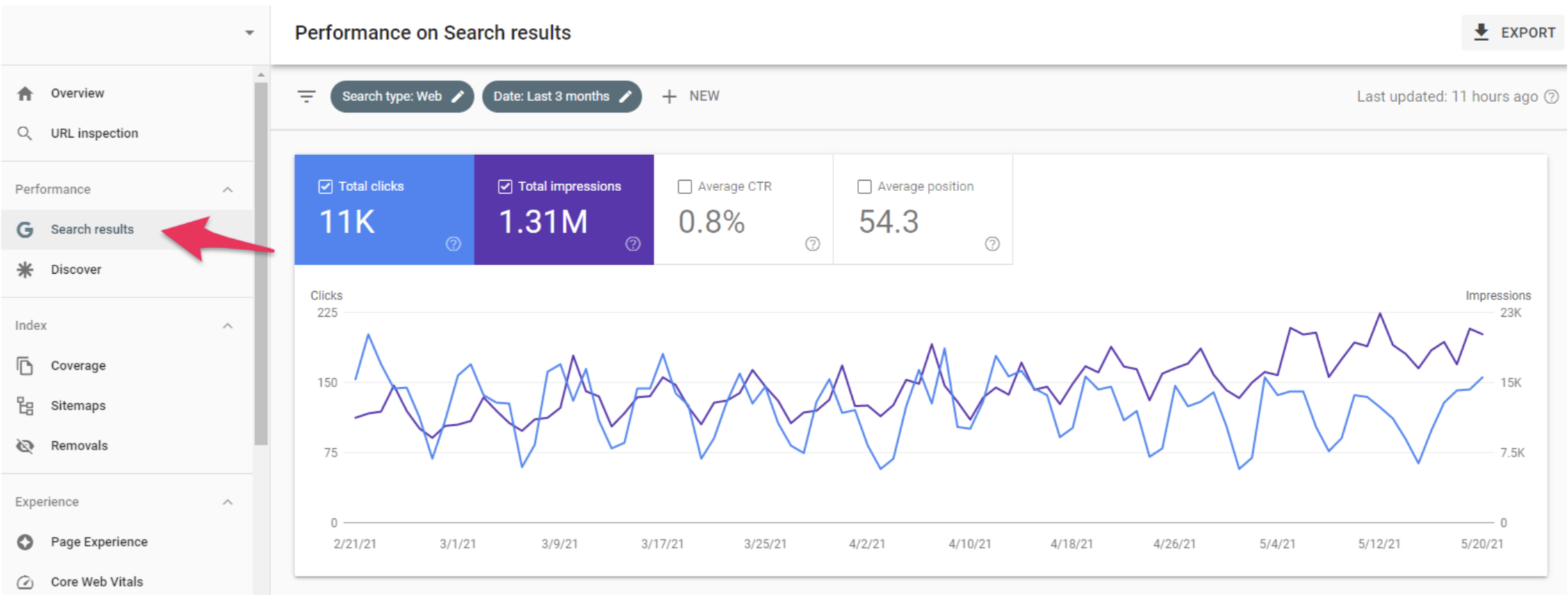
Below this, you can view the top queries that drive traffic to your website, pages, devices and more. Note what keywords drive the most traffic to your website and which pages users visit the most.
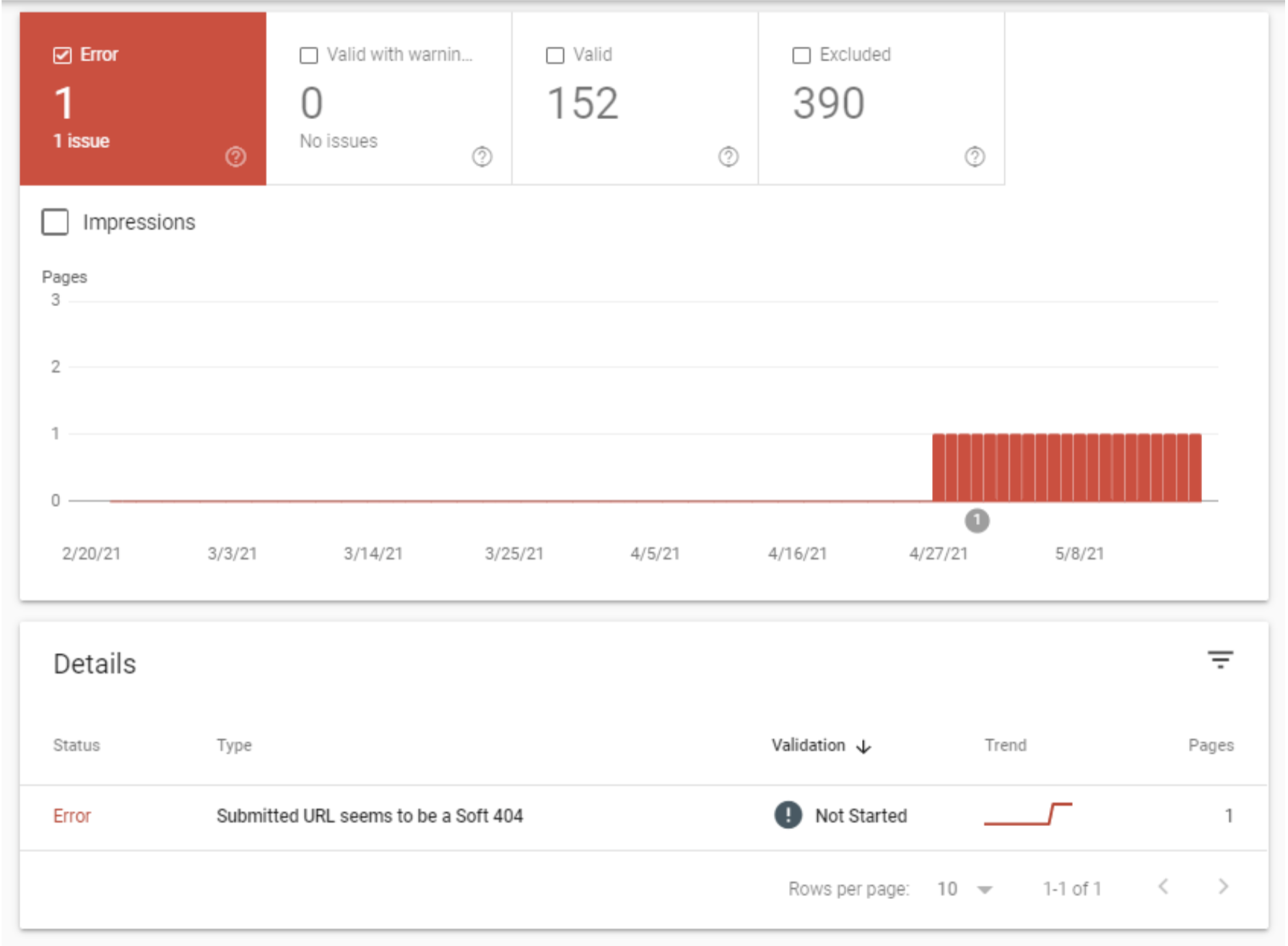
Navigate to the “Coverage” tab to determine if Google is having difficulty indexing particular pages. Green signifies a page is indexed. Red means that the page is not indexed and you can view the error type description to learn more. You should concentrate on these issues first. Yellow means that the page is indexed but has an issue you need to be aware of while grey is a page that may be intentionally unindexed. For example, you might have deliberately excluded it by a noindex directive, or it might be a duplicate of a canonical page that we've already indexed on your site.
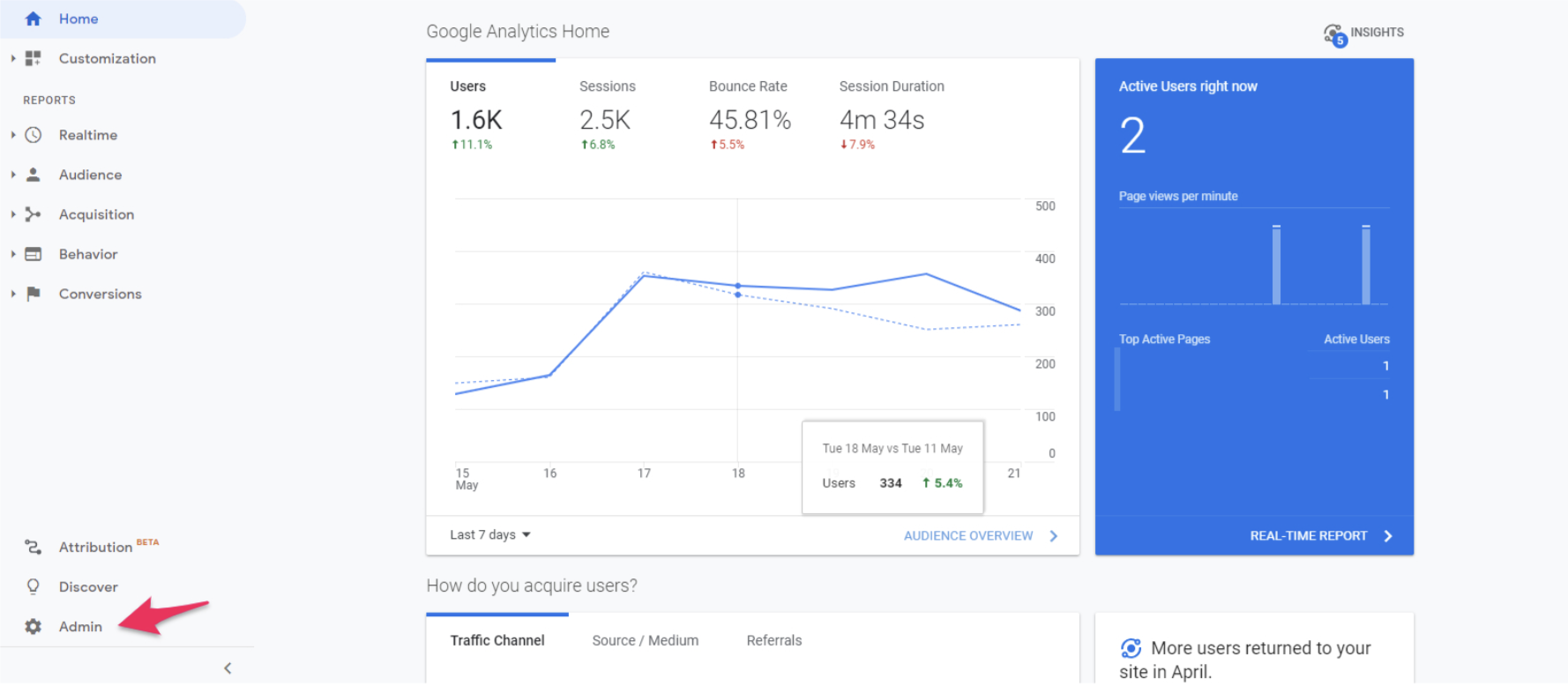
The next tool you need to connect to your website for SEO purposes is Google Analytics. It will give you insights into the users on your website, traffic sources and other search engine metrics. Once you've created an account, click "Admin" on the bottom left to create a new property.
Add a name and follow the setup steps to create the property. You will need to add the tracking code to your website manually or via a plugin or app. After one week, Google will begin displaying the analytics of your website.
Navigate to "Channels" under "Acquisition" and "All Traffic.” Select the organic traffic section to see how many visitors you receive every month from search engines.
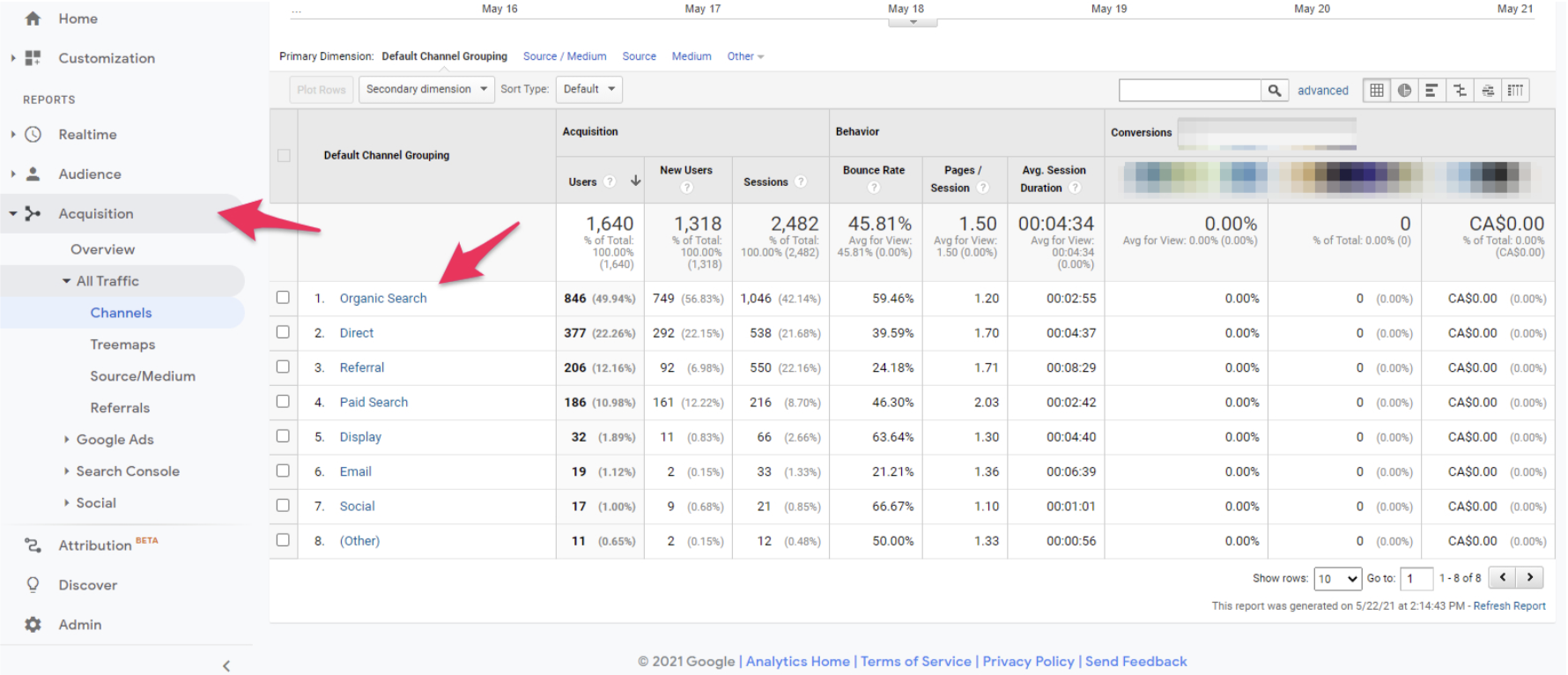
Click the "Landing Page" filter to see the exact pages they visit from search engines as well. Pay attention to the bounce rate and average time on the page. Usually, higher average time on page and lower bounce rates mean that users are finding that page interesting.
Both of these can be improved by writing better content, improving page speed and matching search intent—all of which we will explain further in this guide.
In sum, your main tasks with Google Search Console and Google Analytics are to:
Google uses over 200 ranking factors to determine where your website should be placed in the SERPs. A technical audit looks at the deeper aspects of a website that can be optimized to improve organic traffic, rankings and performance.
One way to conduct a technical SEO audit is to use the tool Screaming Frog. This tool crawls your website and provides reports on errors, links found within the site code, broken pages, redirects, canonical tags, duplicate or missing page titles and other tags important for ranking.
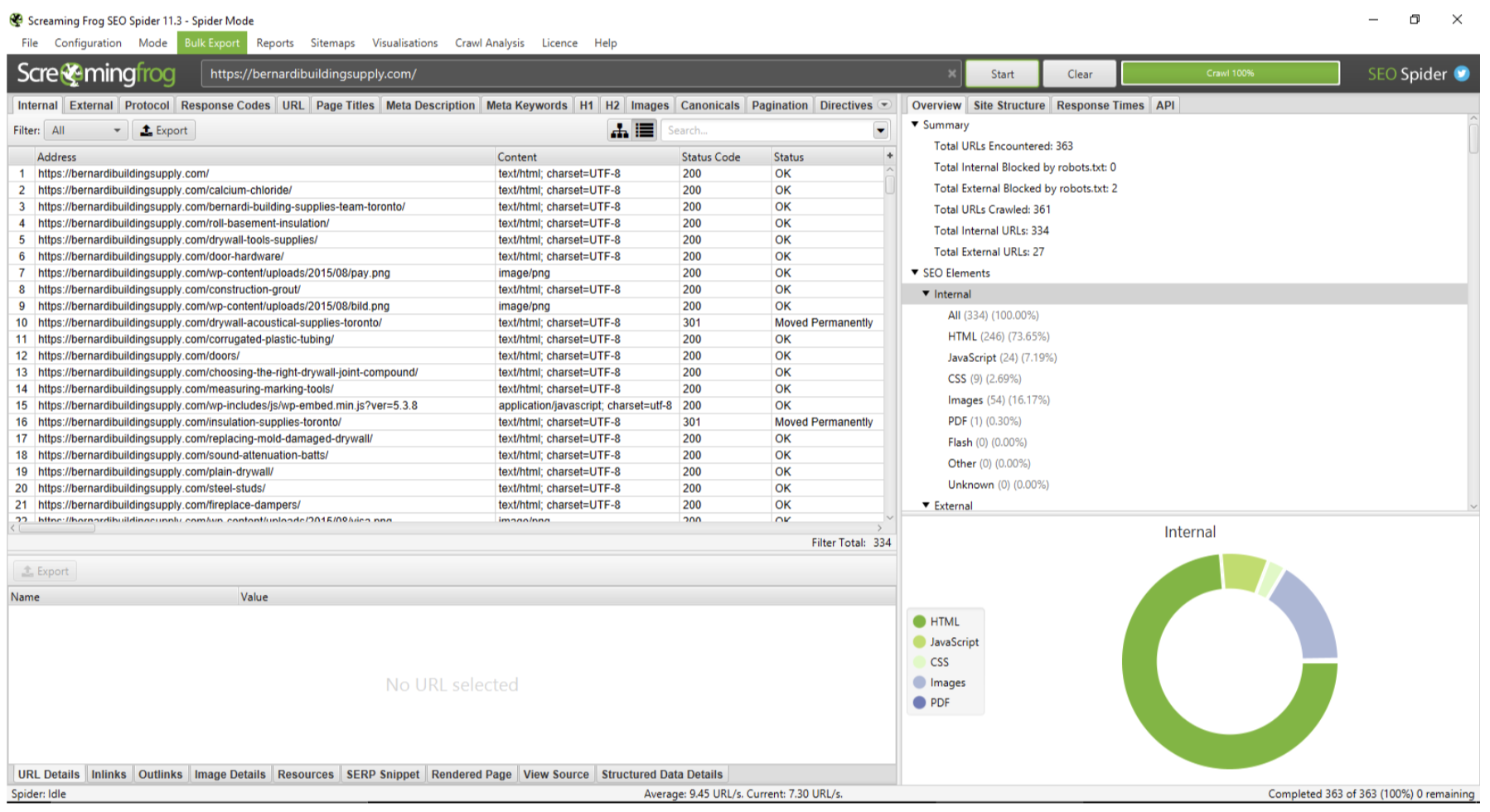
An example of an error would be an internal link linking to a non-existent/removed 404 page or a missing or a duplicate page title. Duplicate page titles can also cause issues with rankings (but not indexation) as each page will need to have a unique title tag (and other metadata) describing the exact content/purpose of that page.
Screaming Frog will help find pages that do not have meta descriptions, title tags or optimized URLs, too. Preferably, metadata will include the main keyword you're targeting on each page.
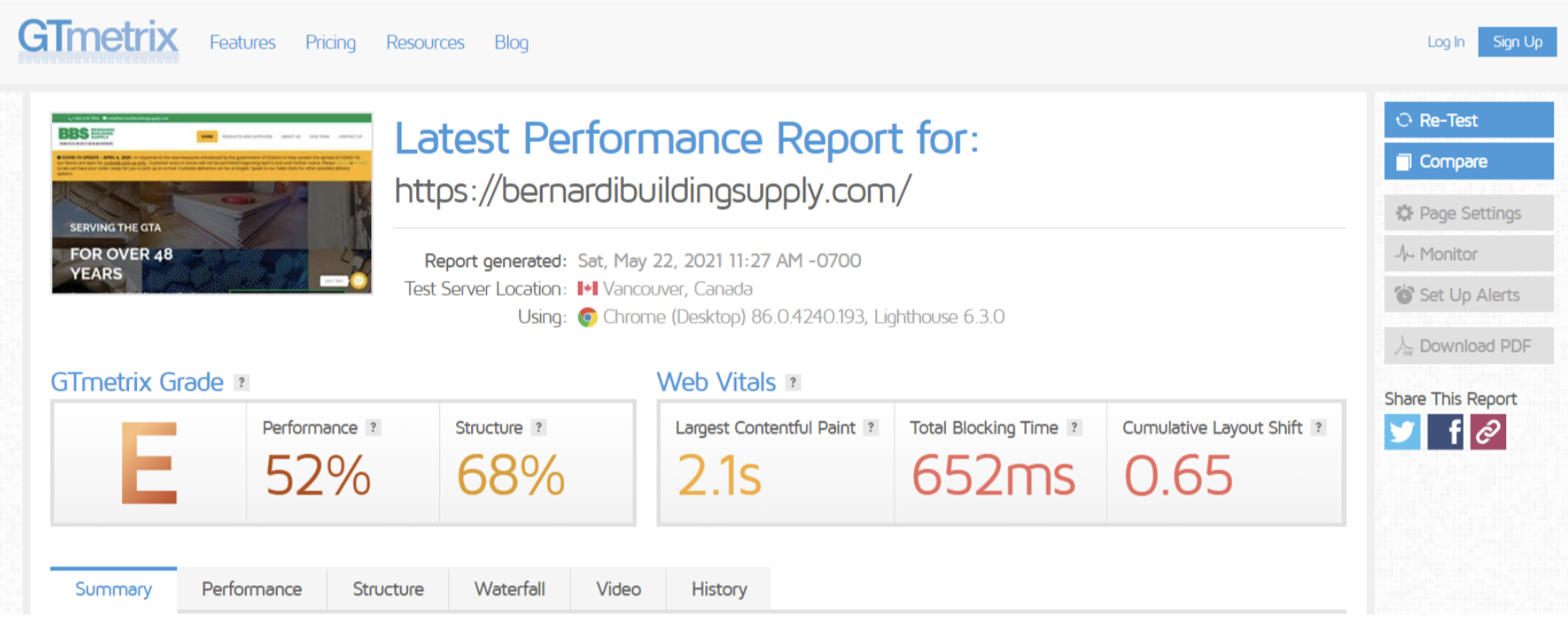
Secondly, we recommend auditing the page speed and any performance bottlenecks with a tool like GTmetrix. Enter our URL on the homepage and click “Test your site.”
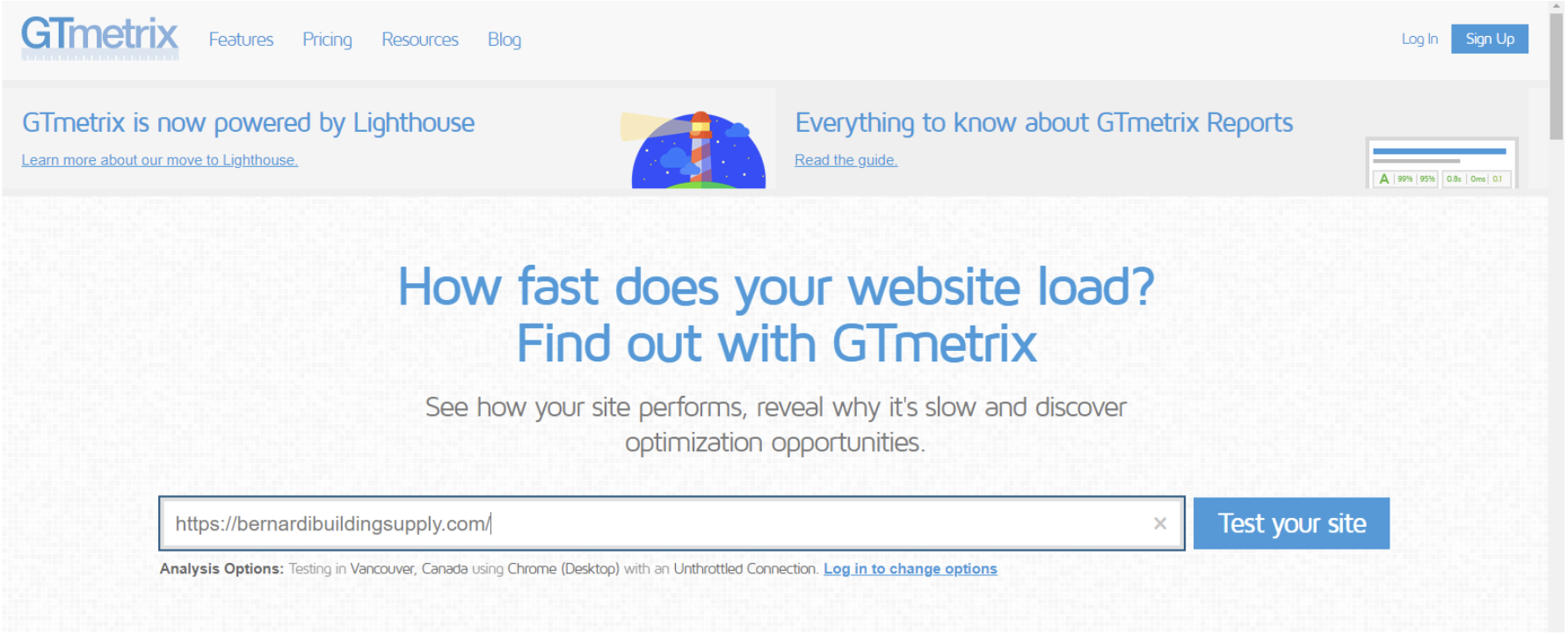
This will provide a detailed breakdown of your website's load time and any areas of improvement. Some of these can be improved with plugins like WP Fastest Cache if you're on WordPress. Common issues include large image files, uncompressed images, no browser caching and not using a content delivery network (CDN).
Afterward, use Google's free mobile testing tool. As of 2019, Google indexes websites based on their mobile-first index because most people search from mobile devices. Enter your URL and click “Test URL.”

The tool will tell you if the website is optimized and responsive for mobile devices or not, plus a preview.
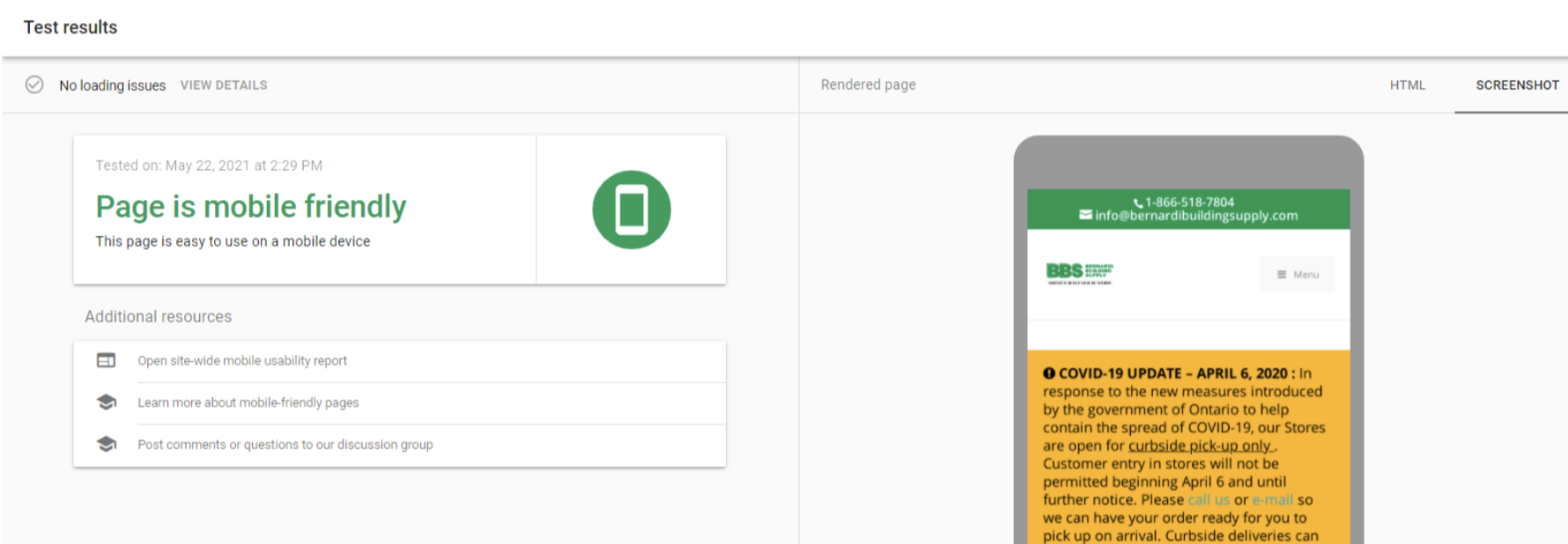
If it isn't phone-friendly, you will need to make pages responsive to mobile devices and ensure that visual elements don't break when they're loaded. Click “View Details” to see more information that will help you achieve this. If there are issues with your page being rendered (or not being optimized) for mobile devices, this tool can provide additional details on specific elements and issues that may be causing that.
An on-page SEO audit looks at the factors on the front end of a website that can be improved to drive more organic traffic. If you improve your website's technical elements, one of the main things left is keyword research and placement. Keywords are the phrases you target to be found on search engines.
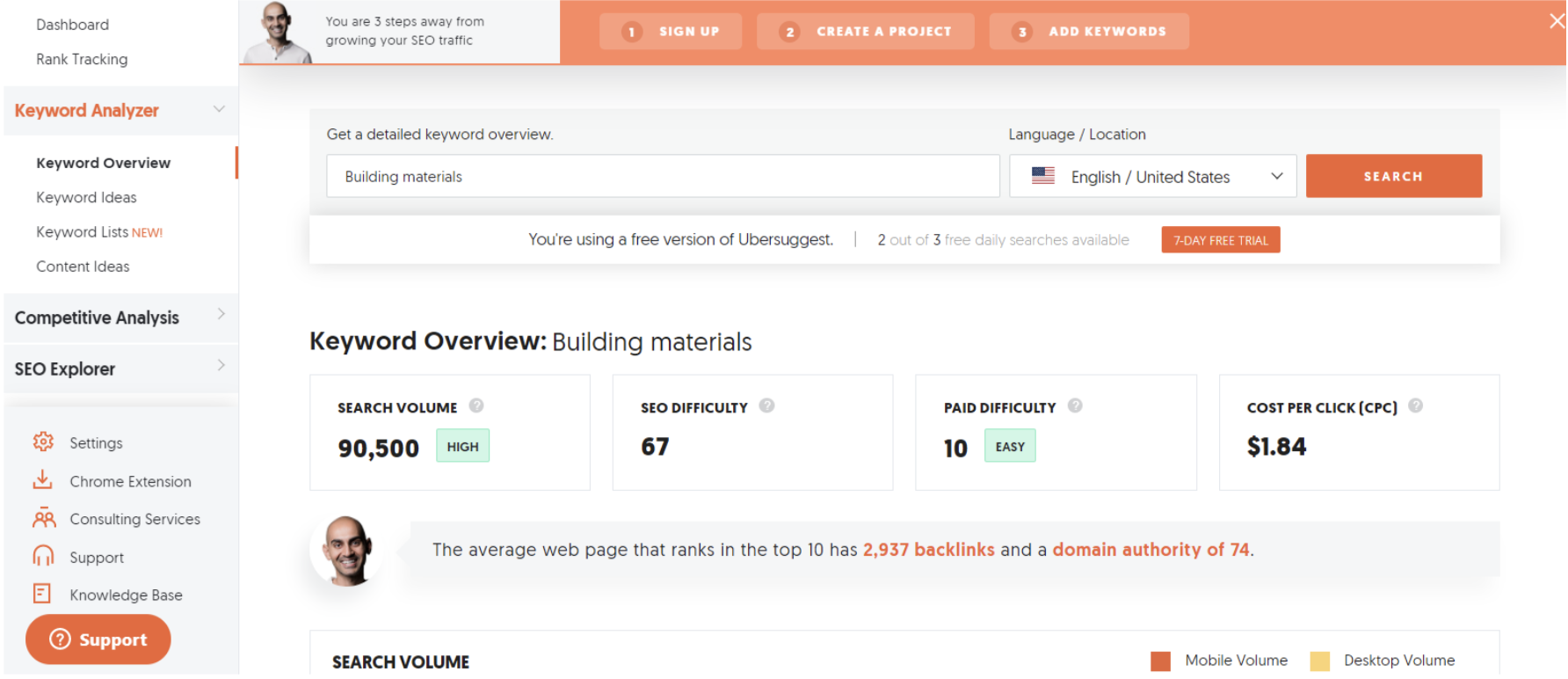
Every page should have a main keyword and secondary keywords. Use a tool like Ubersuggest to find search terms. Enter a word related to the page you're optimizing whether it's a blog post, product page or other forms of content.
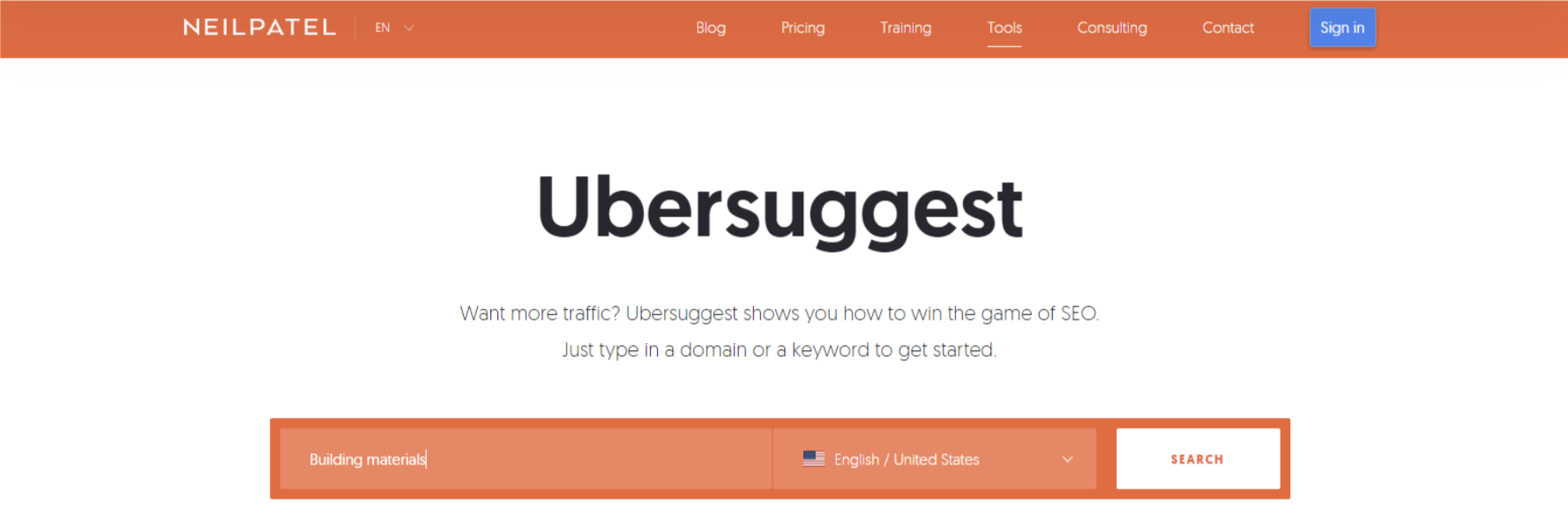
This will provide data on the search term along with keyword suggestions. You want to target keywords that have a low to medium search difficulty (meaning there's less competition) while still having a high monthly volume.
Once you have defined your targeted keyword, make sure that you place it (or its close variations) in the following areas on your page:
Putting keywords in these places helps search engine crawlers understand the context of a page and rank it accordingly. Every page should also:
With the technical and on-page audits complete, you can begin developing your building materials marketing strategy for search engines.
Complete the following steps to develop an SEO strategy that your marketing team can execute regularly.
SEO is a difficult thing to perfect. There are frequent changes to Google's algorithm and small tweaks to a website can make a huge difference, which is why it's wise to conduct an audit frequently to find gaps and weaknesses. Follow the technical and on-page instructions we outlined to find new opportunities and areas of improvement. At a high level, look for:
Ideas for content marketing
A critical part of developing an SEO strategy as a building material manufacturer is to analyze your competition. It will help you understand how your company stands up against competitors and identify gaps that can be capitalized on.
Get started by entering your competitor's URLs into tools such as SEMrush to get a quick snapshot of their keywords, organic traffic levels and backlink profile. Compare these to yours to determine if you are ahead or behind in specific areas.
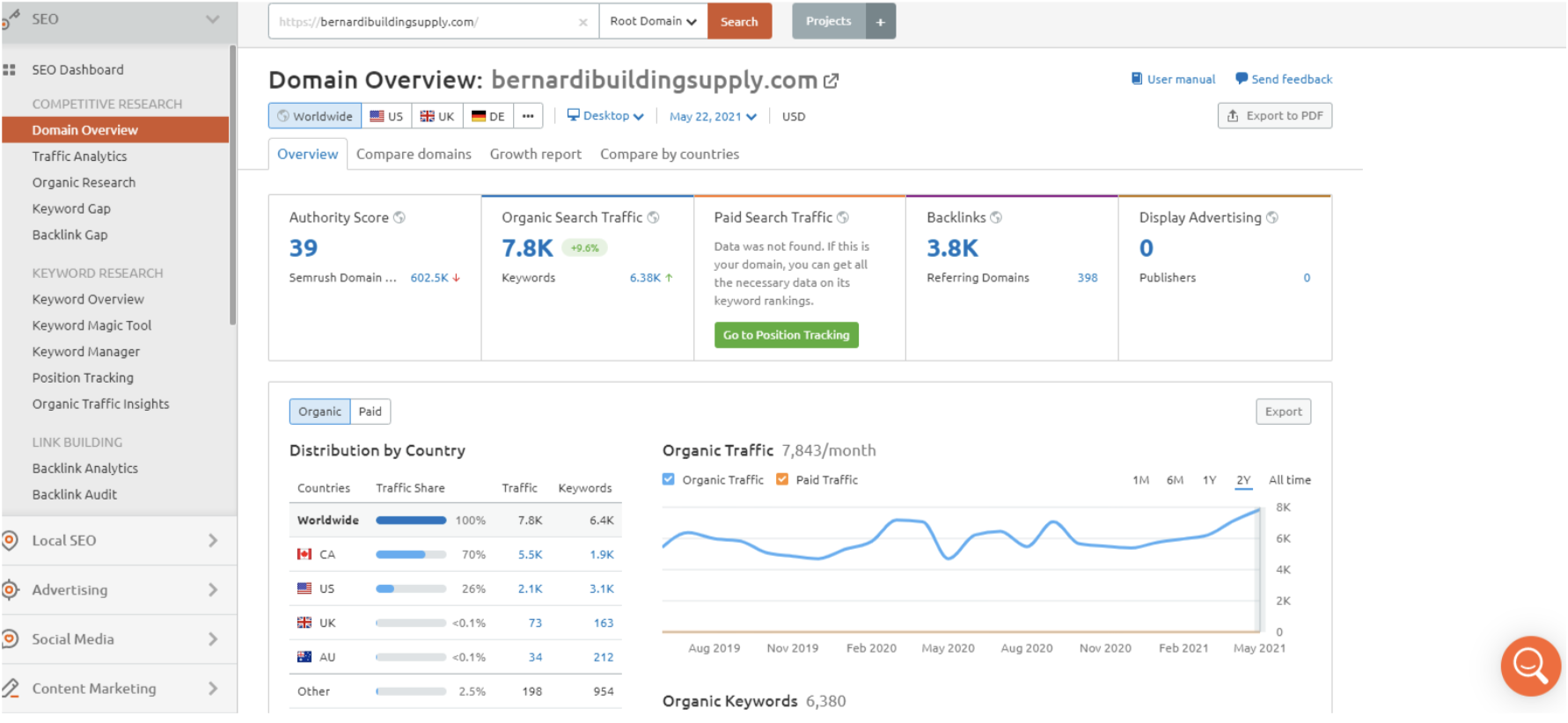
We suggest building materials manufacturer pay attention to:
SEO is a long-term strategy. However, some adjustments can create a nearly instant impact on user experience and other metrics that improve search engine rankings. Building material companies should prioritize SEO strategies based on short-term and long-term goals.
Examples of short-term SEO goals include:
Long-term goals for SEO may look like:
Categorizing SEO goals empowers your marketing team to get easy wins on a consistent basis while having a long-term vision to work towards.
SEO tools are essential for manufactures that wish to automate processes, gain deep insights and improve their SEO faster. Search engine optimization tools offer a suite of features including keyword research, backlink analysis, content suggestions, technical audits and detailed reports. Ensure that your team chooses and sticks to one or two of the main proven software such as:
While many of these tools will share similar features, you can try demos and trials of each one to determine which one is the best fit. Weigh their pricing, monthly limits, and individual features based on your company's goals to select the right one.
Content and search engines go hand in hand. Optimizing the content on your website for SEO enables you to generate more traffic and leads organically. Some manufactures make the mistake of publishing content like blog posts without targeting keywords or having search engines in mind. As a result, they lose out on opportunities to increase visibility.
You can use a tool like Answer The Public to get content ideas. Enter a search term and click search to begin.

This will collect data on what users are searching, rounding it up into questions, prepositions, comparisons and more.
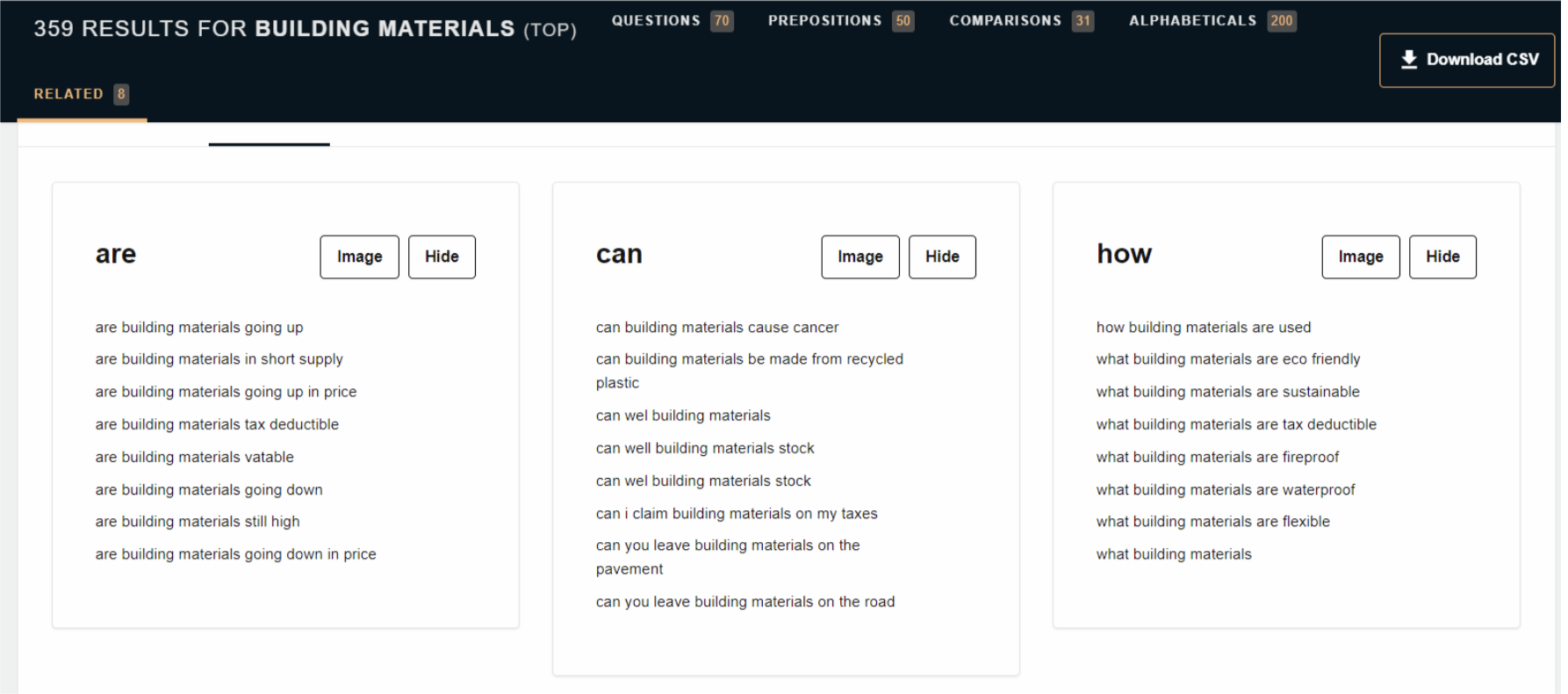
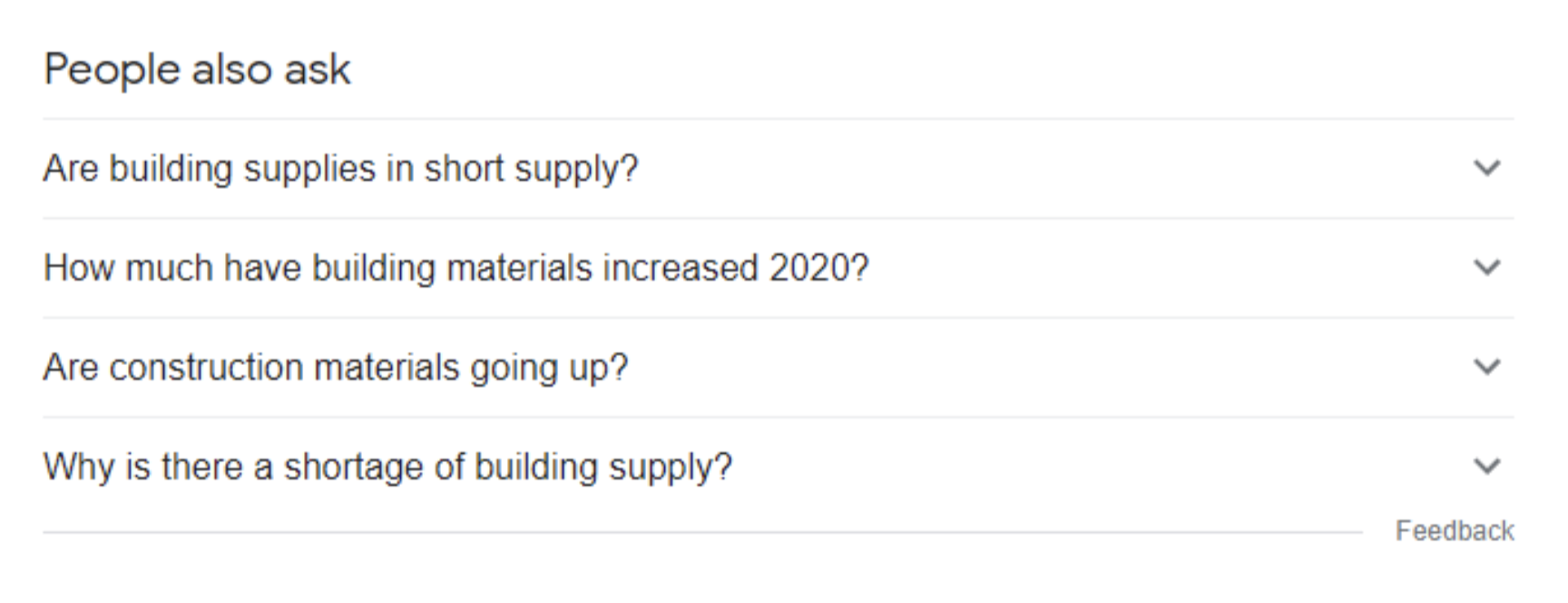
Export these as a CSV or save them individually. Remember —you want to produce content that answers building professionals’ questions and solves their problems. Once you have topics in mind, enter these into Google. At the top, you will find related questions to get further inspiration and research.
Scroll to the bottom of the page to see related searches.
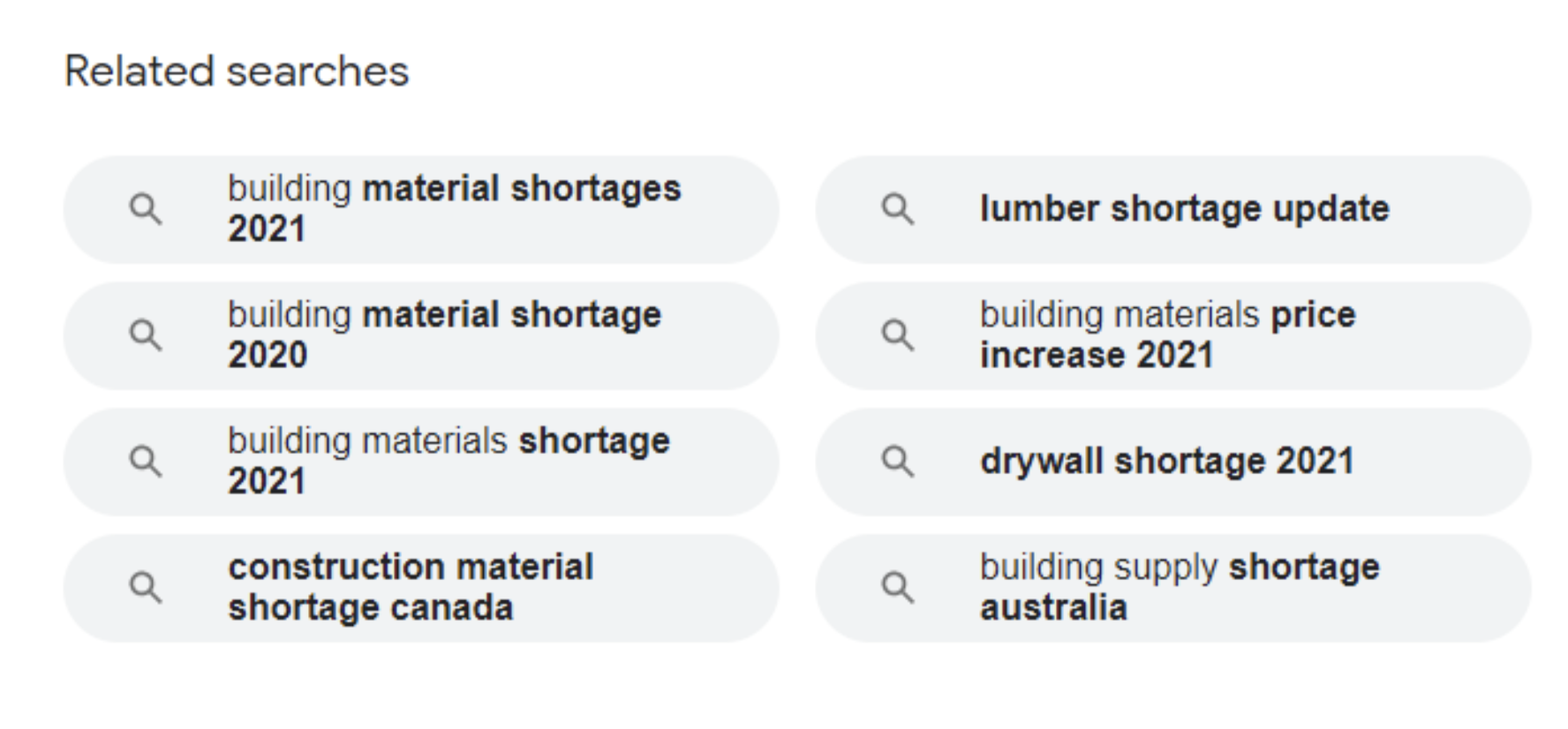
Repeat the steps you took previously for keyword research by:
Promote the content across social media and your email list to generate engagement and inbound backlinks.
Backlinks are like a voting system. The more links that point to your website, the more search engine algorithms view it as a trustworthy resource. However, the quality of backlinks (relevance, authority, etc.) is much more important than the quantity. As a result, you will be ranked higher in the SERPs.
How can you build backlinks? Here are strategies your marketing team can begin implementing:
Outreach: Use a tool like NinjaOutreach to reach out to other building materials businesses asking for them to share your content or link to it if they find it useful.
SEO is essential for building materials manufacturers that want to improve their web traffic, visibility and also increase online revenues and leads. The first step of search engine optimization is improving the on-page aspects of your website. This includes publishing high-quality content, improving site navigation and conducting keyword research. Technical elements like user experience, page speed and mobile responsiveness are also very important.
Off-page SEO, on the other hand, involves building links to your website, reputation management and building an omnichannel brand. All of these are ranking signals that help Google understand that you are an authoritative and trustworthy business worth being shown to more users on its search engine.
Do you want to make your online presence your best salesperson? Learn how Venveo can help you grow your brand, leads and revenue through digital marketing and SEO.